Charming the Pandemic Hobgoblins, Part 2
What We Talk About When We Talk About COVID: Neoliberalism Edition
Note: This was originally posted to my Substack on May 6, 2022. I deleted that Substack a couple years ago and I’m reposting these blogs so they won’t be lost.
This is the second part of a piece looking at the COVID pandemic not as a biological phenomenon but as a social phenomenon. Not the pandemic as the global transmission of a dangerous disease, but the pandemic as the large-scale social implications of that transmission — most importantly the reaction to those implications. Two ideologies reacted to the pandemic by rejecting its real impact. On the one hand are the Hyperrealists, who insist that the pandemic cannot exist; the reason why is in part 1. On the other hand are the Neoliberals, who insist that the pandemic cannot continue to exist. You don’t have to read part 1 to understand part 2.
“Ever get the feeling you’ve been cheated?” - Johnny Rotten, 1978
Four stories about America:
From Revolution to Retirement. A wave of speculation and greed in America resulted in the crash of the Great Depression. A combination of New Deal welfare policies and WWII pulled the US into an unprecedented post-war boom economy. Many children of that prosperity demanded a more just and equal society. Just when it looked like it might be achieved, their dream was quashed by the old powers. The post-war boom thudded to a halt. Their allegiances split apart; former allies became enemies. Their faith in American government institutions were shaken in the 1970s, from the release of the Pentagon Papers in 1971 to the resignation of President Richard Nixon in disgrace in 1974. Their glory days over, disillusioned about the potential of politics to improve society, they turned inward, finding inspiration only in personal health and personal wealth and thus proclaiming their belief in “personal responsibility.” Collective struggle had proved fruitless; all that remained was individual success. They entered their long twilight years pulling up the ladder behind them, the beneficiaries of a generous society they had lost faith in and so dismantled.
From Revolution to Revenge. In 1954 the Supreme Court of the United State came to the conclusion that racial segregation of children in public schools was unconstitutional. A year later, motivated by this victory, the nascent forces of the post-war US civil rights movement coalesced into a mass movement. Despite the “massive resistance” strategy of the racist Jim Crow state leaders, the Civil Rights Act of 1964 outlawed discrimination based on race, color, religion, sex, or national origin for the first time in American history. After that high-water mark, the counterrevolution began, one determined to roll back civil rights to before Brown v. Board, restore “states rights” and reversing popular acceptance of racial, gender, and equality. When racial desegregation proved too popular, right-wing religious leaders looked to the 1973 Roe v. Wade decision as a rallying point for a coalition of religious, political, and cultural reactionaries and their funders. This coalition came to power in 1980 with the election of Ronald Reagan. After decades of capturing legal institutions, rolling back civil rights and voting laws, reversing policies of racial and economic inequality, they finally achieved their goal of erasing two generations of social progress in the reversal of Roe in 2022. To cement and protect their gains, they had enlisted police departments, violent thugs, bigoted petty bourgeois, and right-wing lawyers as their vanguard. Nevertheless, despite their triumphs they clung to their conviction that they will forever be victims of a corrupt, degenerate, Godless society. Their mission mutated into an endless struggle to destroy their own society in order to redeem it.
The Power of Currency. The foundation of the amazing post-war American economy was an alliance between the federal and local governments, giant corporations, banking and finance, and labor. As long as the economic pie got bigger there were always enough slices to go around. The Federal Reserve Bank went about its duty of full employment, ensuring the prosperity was shared. Then in the mid 1970s came the turning point. The end of the Bretton Woods agreement, the Nixon Shock, the oil crisis, stagflation. The pie shrank and the bitter fights over the smaller pieces tore the post-war alliance apart. In the late 1970s the finance sector formed a new partnership with American politicians. Financial institutions and their corporate appendages would manage the economy by unleashing markets free from oversight, supported by policies that favored social stability and greater profits above all. In return the government would shrink, eliminating its previous function of providing basic social welfare and safeguarding civil society against corruption. The demand for stability led naturally to conservative — even reactionary — politics, and greater profits demanded economic austerity for the American populace. These two demands were the essence of neoliberalism, and they became the guiding principles of American politics for the next forty years. Unions were undermined and rendered powerless by global companies chasing low operating costs, as demanded by their shareholders. Wages stagnated in 1979 and never rose again even as worker productivity continued to increase. The idea of public good was replaced by an ethos of unforgiving individualism. Aspects of everyday existence like work, transportation, and health care were privatized, monetized, and thus controlled by gigantic monopolistic institutions immune from public scrutiny. At the same time, the broader economic growth promised by the neoliberals was nowhere to be found. Instead came rentier capitalism, arbitrage, unsustainable venture capital, tax breaks for giant corporations, subsidies, pyramid schemes, hidden wealth, and speculative bubbles. Profits were privatized, losses were socialized. American millionaires became billionaires, then trillionaires. The markets held sway over all.
The Currency of Power. To keep the population from challenging the harsh inequality of the neoliberal economy, a massive system of surveillance, incarceration, and lawfully protected violence was inaugurated. In the wake of the 9/11 attacks, this latter system of violent social repression became a self-justifying, self-sustaining entity, beyond the control of the politicians and financiers who had created it for their own ends. The self-styled citizens of this shadow carceral state began to see themselves as the true stewards of the United States. Unmoored from any socio-political purpose, radicalized by right-wing media, energized by Internet-fed moral panics, they actively embraced several basic tenets of fascism: nationalism as an identity; loathing of other races and genders; unreflective action for its own sake; life as permanent warfare; syncretic occultism; hyper-gendered patriarchy; and insisting that they alone are the true voice of the people, no matter how small their numbers or unpopular their beliefs. Right-wing American politicians tried once more to assert control over this fascist crypto-party, only to be overtaken yet again by the anarchic police riots and paramilitary rallies of 2014-2020. The apotheosis came with the storming of the Capitol building on January 6, 2021. At that moment the crypto-party absorbed the actual Republican party.
What Was Neoliberalism?
The common thread of these stories — the skewer impaling every piece of American society — is an ideology that pretends to disdain ideologies in general: neoliberalism.
What was neoliberalism? I’m going to ignore the ongoing debate around the precise definition and lay out what everyone commonly agrees are the basics.
(Quick note that neoliberalism has nothing to do with liberal politics.)
Classical economic theory had thrown the US post-WWI prosperity into the bottomless pit of the Great Depression by 1930. To dig out of the hole of 24% unemployment, the establishment turned away from the old boom-and-bust cycles and towards Keynesian economics. Keynes articulated the link between the labor market and the stock market, especially the inverse relationship between interest rates and unemployment. The government could directly inject money into the economy to smooth out the boom-bust cycles which in turn kept unemployment manageable. It brought the US into the largest, longest boom in its history.
The price the government eventually paid for this fiscal policy was inflation — too much money chasing too few goods. Keynes thought high inflation would only kick in at full employment; besides, manageable inflation was the sign of an economy that was growing, not stagnant. But in the mid-1970s the economy both stagnated and hyper-inflated. The Keynesians couldn’t explain this nor figure out a way to stop it. The economy was eventually pulled out of this morass — in no small part by the Federal Reserve engineering mass unemployment and the US government dismantling the welfare state created by the New Deal. (This created a wave of poverty and homelessness that continues to the present.)
Keynesian economics was discredited; classical economics was exhumed. But the new classicists went farther than their predecessors. After the Great Depression the federal government put in place financial safeguards and legal guardrails to keep the corporate/financial sphere subordinate to the political sphere. The purpose of having an economy, after all, was to create and spread prosperity for all citizens, as equally as possible. The neoliberals flipped this on its head. If the American government wanted the economy to grow again it would have to get comfortable with things getting worse for some citizens in order for things to get better for others. Equality of opportunity would replace equality of outcome, meaning each individual’s poverty reflected their own determination to succeed, not a policy . Competition would replace cooperation; this naturally meant an economy of individuals, not cooperatives like unions or activist organizations. National sovereignty itself would give way before the World Bank, the International Monetary Fund, and the World Trade Organization. The ideology of The People would diminish so the non-ideology of The Market would rise in its place.
The political, cultural, and financial ruling class spent the years between 1980 and 2007 recalibrating every aspect of America to match the vision of a society shaped by corporations and devoted to deregulating and expanding global markets. If the results of this free market society were Dickensian squalor or rampant corruption and speculation it must be that the markets themselves were not free enough. Capital itself — and thus its devotees — was not motivated by good or evil; its amorality rendered it innocent of consequences.
Then the whole thing fell apart, at the same time, all over the world.
Dead Plan Walking
There were numerous, complex reasons the global economy collapsed in late 2007 and 2008. They were all just the proximate causes. Neoliberal socio-economics was the ultimate cause.
Just as the Great Depression made classical economics obsolete and stagflation discredited Keynes, the Global Financial Collapse exposed the rotten core of neoliberalism. It should have been replaced with a theory to match the new realities of the world, one which might have emphasized the value of international collaboration around potential mega-projects like reversing the climate crisis. Or it could have led to a reflective, domestic economics, using new technologies and a renewed labor alliance to create a new age of of prosperity and leisure, lifting millions out of poverty. More than enough wealth had been created over the last four decades, it just needed to be tapped into. But nothing changed.
It may be … that the most catastrophic feature of neoliberalism was the belief that it was a thing. It was not. It was not an order. While it certainly had durable features: capital’s urge to break worker power, say, or the ruthless march into all quarters of atomizing market logic, these cannot provide a particular period’s internal logic. They are inbuilt to capitalism: there at the beginning, there at the end. If “neoliberalism” describes a certain level of development for these features (and we are not sure it does even that) it cannot simultaneously explain how they reached those levels. Meanwhile, what seems increasingly clear to us is that the span was characterized by no particular social coordination conscious or automatic, liberatory or maleficent. Neither capital nor its antagonists had a plan, really. “The new spirit of capitalism” was attrition, extraction, and exhaustion. Growth ended and stayed ended. For all the chitchat about hyperpartisanship and polarization, the center endured, a gray parade of necromancers one after the next pretending to raise accumulation from the dead. There was a bunch of path dependency. It further immiserated a vast portion of a largely immiserated world. The last couple of years have absolutely felt like a kind of passage. And yet: volatility has given onto volatility, impasse onto impasse. - Nikhil Pal Singh and Joshua Clover, “Static and Signal: Part One”
Nothing new has has overthrown neoliberalism. No ethos of commonwealth has replaced Americans’ obsession with personal wealth. If anything the hyper-individuality has intensified. It’s every person for themselves without a net, especially when it comes to social problems like health care, education, the environment, housing, exploitation at work, and personal safety. The latter category includes factors outside our personal control, like gun violence, food safety, physical and mental disability, and car safety.
That finally brings us to the pandemic.
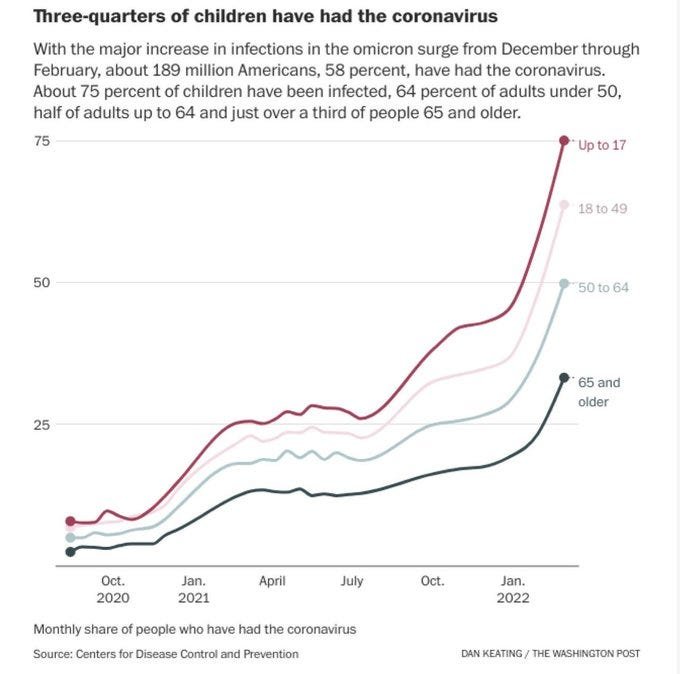
If I were to ask you if the pandemic is a health crisis or an economic crisis, what would you say? You would probably say a health crisis, obviously. You might say both. I’m going to guess you wouldn’t say it was a cash flow problem that should be handled by managers, consultants, and markets.
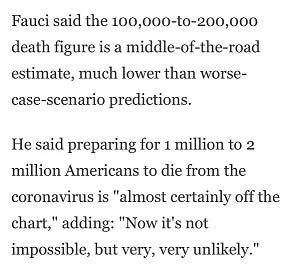
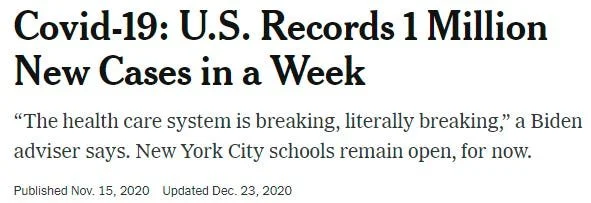
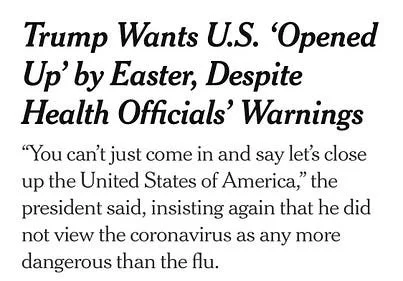
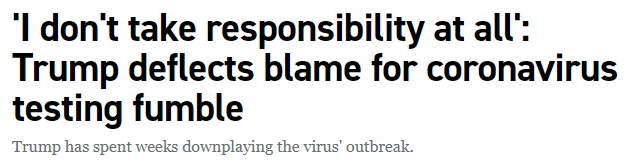
Nobody disputes that the Trump administration made the pandemic worse in every possible way. The media likes to say they “bungled” it but that doesn’t sound strong enough for 25 million confirmed coronavirus cases in the US, over 400,000 of which resulted in death. Trump has always valued his own family’s enrichment above all, so in March 2020 he chose Jared Kushner to manage the government response. It resulted in a wave of corruption that at any other time would have been a massive scandal. Instead of choosing a new leader from the field of public health, Trump next turned to Peter Navarro, his trade advisor, whose January 2020 warnings about CORONA Trump had ignored. Unable to get a response from Trump, Navarro privatized the response just like Kushner had, and just as incompetently. After spending a billion dollars on supply contracts with nothing to show for it, he shifted in May 2020 to pushing hydroxychloroquine as a COVID cure-all. All while Trump insisted over and over that businesses and schools in America had to “reopen.” After years of incompetence and inaction, surely Joe Biden would put the public health experts in charge.
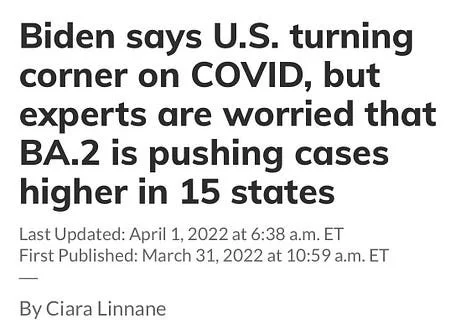
In December 2020, Biden assigned the COVID logistics job to Jeffrey Zients. Zients had directed the National Economic Council; had assisted Barack Obama with economic policy; served as the chairman, CEO, and COO of the Advisory Board Company, a health care business consulting group; served as the chairman of the Corporate Executive Board; founded the the investment firm Portfolio Logic, which focused on the health care business; was the CEO of Cranemere; and served on Facebook’s board of directors. This was the extent of his public health experience. He was supposed to bring managerial acumen to the implementation of Biden’s COVID policies along with coordinating the supply chains.
But Zients was part of the neoliberal establishment — a man of markets, not morals. If the public had looked closer, they might have noticed that he was as corrupt as anyone in the Trump administration. He could have used the Defense Production Act to finally mobilize an effective government response, but that was never a realistic possibility as long has the US Chamber of Commerce didn’t like the idea. Neoliberals didn’t like the idea of financial support for struggling Americans — we left government intervention behind with Keynes — so it stopped.
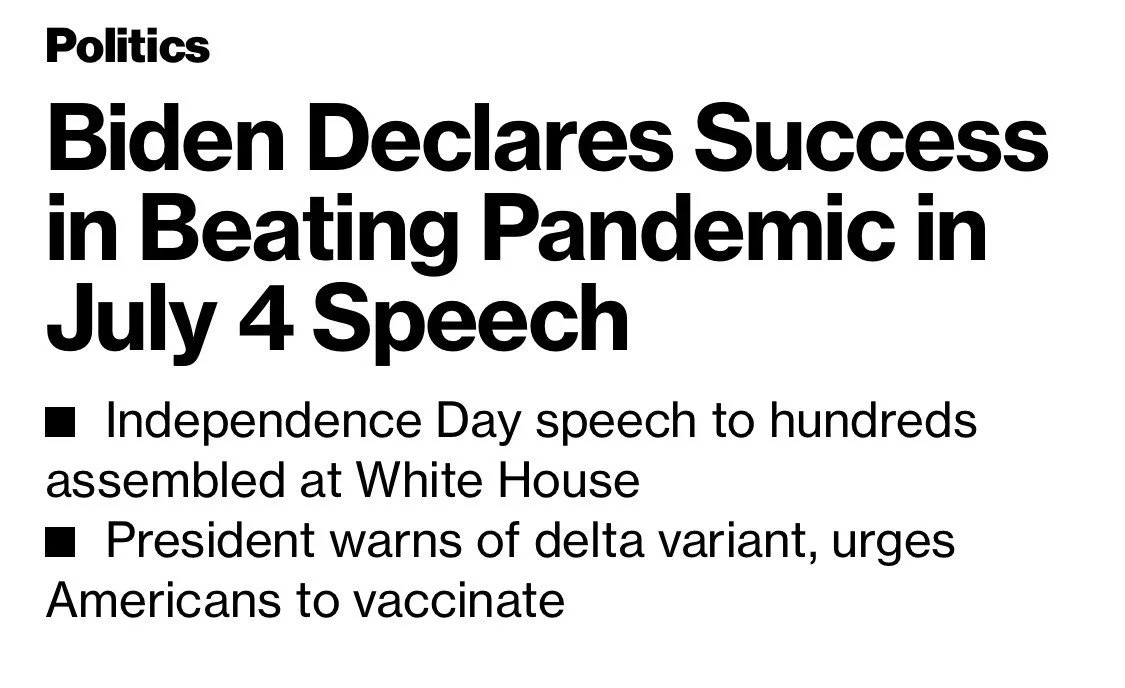
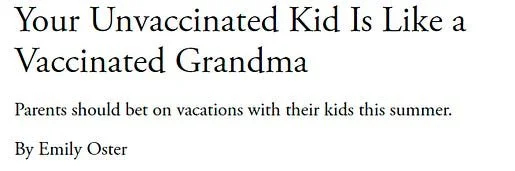
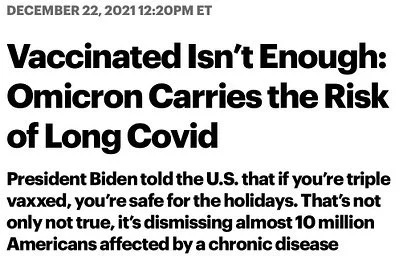
As the delta wave crested in the summer of 2021, the CDC (via Zients) claimed that vaccinated people had nothing to worry about; it was now a “pandemic of the unvaccinated.” This was neoliberalism at its neoliberaliest: you, an individual, had to make the rational choice to avail yourself of the vaccine. Public health had to make way for private health. When the omicron wave hit, the new mantra became “we have the tools” to fight the virus: vaccines, masks, and testing. Of course you didn’t have to get the vaccine or even get tested if you didn’t want to; you didn’t have to wear a mask around other people; and tests were hard if not impossible to get. It was all a matter of assessing your own personal risk, because everything was personal. The dismissal of immunocompromised people, Black Americans, and other high-risk groups bordered on eugenics. From an economic point of view the real victims were landlords and upper management. The markets, however, soared into the stratosphere.
When it looked like omicron was finally over and before another wave had a chance to appear, Jeff Zients quit. By then both the Hyperrealists and the neoliberals had joined forces to create what Tom Scocca calls “the ideology of Unlimited Covid.”
Supported by an alliance of conservative and liberal officials and amplified by both groups' preferred media, Unlimited Covid has evolved from a de facto national strategy to an explicit ideology. Rural farmers, suburban business owners, and urban professionals alike are now working diligently toward the goal.
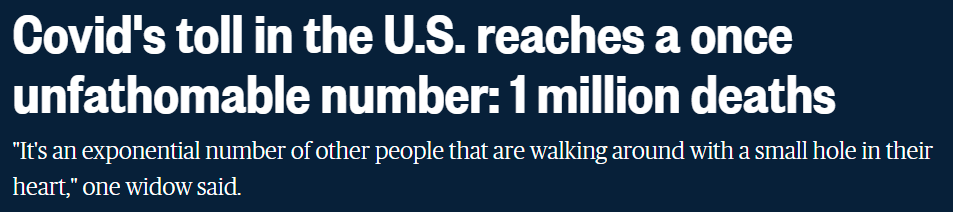
The result is the world's highest overall coronavirus death toll and the highest current daily number of deaths, as the nation of 330 million encourages the omicron variant to spread. Since the start of the pandemic, American life expectancy has declined by at least 1.8 years.
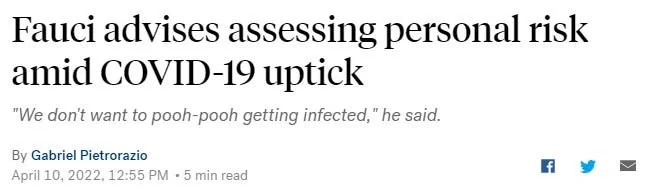
Rather than fight the pandemic, the nation has embraced a goal of fighting against the fight against the pandemic. While other countries monitor case counts or hospital capacity, the United States is focused on driving the number of closures, vaccination requirements, and mask orders down to zero. Even where there are no closures, the most dedicated Americans battle against them anyway.
The Neoliberal Society and its Future
In part 1 we talked about how Hyperrealism can only be resisted through taking away their power. No appeal to sacred democratic institutions or the better angels of their natures will have any effect. For all its terrorism, Hyperrealism’s dependency on power is its weak spot. Power can be resisted with power. The crucial point: it has to be collective, unified power. The right wing, despite its cruel stupidity, understands this. It’s how Roe v. Wade was nullified, with a century of civil rights soon to follow.
Neoliberalism has the same weakness. Sustained collective action, mutual aid, and rolling back the gigantic carceral state are just three examples of how we can finally start to recover from the slow-motion disaster of the last half-century. Generosity, not austerity, might save us from the darkness of a neoliberal future. Voting as an individual act, isn’t a threat to neoliberalism. But collective direct action like the Black Lives Matter protests threaten both the soldiers of capital and the masters of the markets. Voting is especially useless because markets, by their nature, are undemocratic, even anti-democratic. They privilege property over people and always will.
Voters in a democratic country with a solidly neoliberal economy are choosing between conservative technocrats and ultra-conservative populists. The latter are obviously brutal, but the former are just quieter about their cruelty. In the case of Roe’s reversal, the technocrats wanted open debate, a hearing of both sides, free speech and opinion. The right-wingers wanted the power of life and death over women and their bodies; with nothing to stop them they reached out and took it. The technocrats’ framework allowed this violence to appear, violence which will now shred that framework from within. The logic of neoliberal economics leads to the violence of right-wing politics.
The future of a post-neoliberal civics will depend on the American middle class. Middle-class Americans embrace neoliberal socio-politics because they’re convinced there’s no alternative to the zero-sum death struggle inside the neoliberal thunderdome. Pretending otherwise, they believe, is naive, immature, even dangerous. Thus they rationalize away their inability to find common cause between classes, within their own class, and even within their own communities. Crises that require a collective response, like the pandemic or climate collapse are set aside, then indefinitely deferred.
There seems to be a dawning realization even among the middle class that living as atomized individuals under decades of economic austerity and an unchanging social status quo made them into suckers. Theodore Adorno put it this way:
The individual has been, as it were, merely invested with property by the class, and those in control are ready to take it back as soon as universalization of property seems likely to endanger its principle, which is precisely that of withholding.
In other words, just like the rest of us they won’t get an even break. So what do they have to lose but their chains?
Charming the Pandemic Hobgoblins
I’ve argued that the answer to charming away the two pandemic hobgoblins, the two frightening ideologies that got us here and won’t get us out of it, is power, amassed and used collectively, for mutual benefit. Easy for me to say. But it’s starting to happen. There will be a backlash, but those of us born since the mid-1970s have lived our whole lives in a backlash to the events of 1954 to 1970. We’re long past due for a backlash to the backlash.
Maybe there won’t be any lasting social impact from the COVID pandemic, just like the 1918-1919 influenza pandemic faded into near-obscurity when the worst was over. For the Hyperrealists the pandemic exists outside the America simulation, and thus never really existed at all; for the neoliberals the pandemic has to stop mattering so the markets can once more take precedence. There are ways for us to slip between these two dead ends, we just have to see one, set our feet on the path and start moving. As Adorno put it, “The almost insoluble task is to let neither the power of others, nor our own powerlessness, stupefy us.”
The Swans
I started this piece with a quote from Plato’s dialogue Phaedo, so I’ll end it with another quote from the same dialogue. It makes me think of how the pandemic has spent two years crushing Americans’ bodies and souls, whether or not we even caught the virus. You might think that would drain away our hope for a more just world. It hasn’t. If anything, Americans have begun to slowly change the status quo. Some took to the streets in huge numbers and directly challenged what is, essentially, a modern high-tech domestic army. Some changed the ruthless exploitation of their labor, either through organizing against incredible odds or clawing back some autonomy and self respect from their petty overlords. Some are working to make their communities safer and more hospitable after decades of neglect and brutalization. A better world is actually possible — maybe closer than it’s been in a long time, despite everything.
Socrates, condemned to death, has been talking with his companions about whether or not his soul will exist after his body dies. His companion Simmias explains that they all have doubts and question, but they don’t want to upset him in what will be Socrates’ last few minutes of life. In response, Socrates laughs.
You seem to think I am inferior in prophetic power to the swans who sing at other times also, but when they feel that they are to die, sing most and best in their joy that they are to go to the god whose servants they are. But men, because of their own fear of death, misrepresent the swans and say that they sing for sorrow, in mourning for their own death. They do not consider that no bird sings when it is hungry or cold or has any other trouble; no, not even the nightingale or the swallow or the hoopoe which are said to sing in lamentation. I do not believe they sing for grief, nor do the swans… they sing and rejoice on that day more than ever before.