"A Victory for White Life," pt. 1
Dobbs and the Great Replacement ideology
Note: this was originally posted on my Substack on June 30, 2022. I deleted that Substack a couple years ago and I’m reposting these here so they don’t get lost.
Now that the US Supreme Court has stripped women of their constitutional right to privacy and autonomy over their own bodies, anti-abortionists are taking a victory lap to gloat and celebrate their triumph over 50% of the US population. Among the festivities was a old-fashioned Trump rally June 25. These kind of right-wing entertainments have become normalized in 2020s America so mass media was set to ignore it — until a proclamation from Republican Rep. Mary Miller from Illinois gave away the game. “President Trump, on behalf of all the MAGA patriots in America, I want to thank you for the historic victory for white life in the Supreme Court yesterday.” Her spokesman Isaiah Wartman tried to walk back her comments by saying that (a) it was “a mix-up of words” and (b) she is the grandparents of several non-white grandchildren, which apparently gives her a pass. (Isaiah Wartman is not just a right-wing mouthpiece who works has also worked for Marjorie Taylor Greene, he has multiple PACs of his own in Georgia.) But when Wartman claims that Miller had a “mix-up” he is admitting that she had a Freudian slip; she said what she really wanted to say whether she consciously intended to or not. Of course she might have just been voicing her true opinion, which happens to be the same as the neo-Nazi motto of the 14 words. From the ADL:
"14 Words" is a reference to the most popular white supremacist slogan in the world: "We must secure the existence of our people and a future for white children." The slogan was coined by David Lane, a member of the white supremacist terrorist group known as The Order (Lane died in prison in 2007). The term reflects the primary white supremacist worldview in the late 20th and early 21st centuries: that unless immediate action is taken, the white race is doomed to extinction by an alleged "rising tide of color" purportedly controlled and manipulated by Jews.
This is the core of “Great Replacement,” the aspect of the white supremacist ideology that worries about the white “race” going extinct as a result of low white birth rates, high non-white birth rates, and immigration into those bastions of whiteness Europe and North America; thus it’s been a core belief in right-wing racist thought for generations in Europe and the US. It’s become especially popular among mass killers all over the world in the last few years, from Brenton Tarrant to Payton Gendron. (Not that anti-abortionists have any problem with violence.)
Mass media in 2022 has cringed over the movement of the Great Replacement panic from the militia fringe to the mainstream via Tucker Carlson, but a panic over whites losing their unique racial power and identity has been part of American politics for hundreds of years — the entire immigration policy of the US was founded on it. Mary Miller’s public declaration is perfectly in line with this history. But to fully understand the ramifications of Miller’s specific words we have to connect the dots between two different lines of racist thought: eugenics and the misogyny that expresses itself as anti-abortionism.
Anti-abortion extremists have long been fond of saying that birth control (including abortion) is equivalent to a policy of eugenics against Black children. It’s one of the arguments undergirding Clarence’s Thomas’s legal reasoning in Dobbs. When Clarence Thomas linked abortion with eugenics in 2019, he was, as usual, making up a historical precedent in an attempt to inject the barest tinge of tradition into his obsession with stripping Americans of their rights. His ahistorical linkage of eugenics and abortion appeared again in the decision making women second-class American citizens. So there’s at least a fifty percent chance Thomas actually believes it.
Even though Thomas gets his history wrong — his decisions are the raw exercise of unchecked power anyway, so he doesn’t care about historical fidelity — a link between the concept of eugenics and the promoters of white race panic was forged in the 1970s. The Great Replacement is that link.
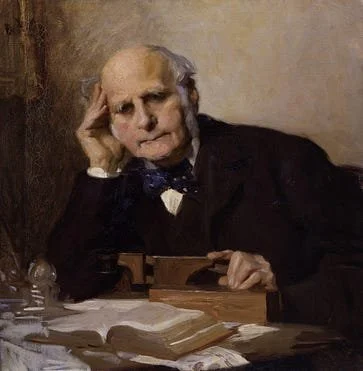
Francis Galton
The story begins with Francis Galton. Galton was born in 1822 in Birmingham, England. For the sake of space I’m going to gloss over Galton’s early years as a child prodigy and world traveler. When Galton finally settled back in England, he found his true calling: science and invention.
Galton was obsessed with numbers and counting — his personal motto was “whenever you can, count” — which led him to make great advances in statistics, where he invented concepts like the median and standard deviation. This in turn led him to advances and inventions in several other fields, including: meteorology, where he create the first weather map; forensics, where he separated fingerprints into six major types; perception, where he invented the Galton Whistle to test hearing, which became the first dog whistle; psychology, where he pioneered the use of questionnaires to gather data on large numbers of subjects; and various others, including a study on how to make the perfect cup of tea. But among these innovations, Galton’s real legacy would be in a field he personally created and named: eugenics.
Galton’s life was changed when his cousin, Charles Darwin, had his book The Origin of Species published in 1859. Galton was obsessed with the book, especially the section that dealt with the breeding of animals. Darwin only hints at using his theories to study variations in homo sapiens, so Galton decided he would go down that path himself. He was determined to unlock the secrets of human heredity by analyzing traits like height, fingerprints, facial features, and, crucially, mental characteristics like intelligence, which Galton assumed was inherited.
Since Gregor Mendel’s research was still unknown, Galton had to rely on gathering large amounts of data from a wide range of subjects, a project well-suited to his innovative statistical techniques and questionnaires. Using a technique he called “historiometry,” Galton analyzed numerous biographies of prominent men — judges, statesmen, scholars, premiers, scientists, military commanders, writers, and artists. He quantified this biographical information and converted it into tables and charts. Galton also looked closely at the families of these men, to see if they too had eminent relatives and if so, where their rise to eminence began.
Overall he analyzed 300 families and about 1000 individuals in total. He found that the “eminence” dropped off a bit for each preceding generation, and for the distance from the person in question; for example, cousins were less eminent than brothers. This pattern confirmed for Galton that genius was an inherited trait that accumulated over time. He published his findings in an 1869 book, Hereditary Genius. To say that this book doesn’t withstand modern scrutiny is putting it mildly. And despite the influence of Darwin, whose theories laid waste to centuries of “race science,” Galton recreates the old racial hierarchy inherited from physical anthropology by suggesting that the “negro race” is two levels of intelligence below the Anglo-Saxon race.
What made Hereditary Genius a landmark work was Galton’s suggestion that humans could use the inheritance of genius to actively direct the course of their evolution.
I propose to show in this book that a man's natural abilities are derived by inheritance, under exactly the same limitations as are the form and physical features of the whole organic world. Consequently, as it is easy, notwithstanding those limitations, to obtain by careful selection a permanent breed of dogs or horses gifted with peculiar powers of running, or of doing anything else, so it would be quite practicable to produce a highly-gifted race of men by judicious marriages during several consecutive generations. I shall show that social agencies of an ordinary character, whose influences are little suspected, are at this moment working towards the degradation of human nature, and that others are working towards its improvement. I conclude that each generation has enormous power over the natural gifts of those that follow, and maintain that it is a duty we owe to humanity to investigate the range of that power, and to exercise it in a way that, without being unwise towards ourselves, shall be most advantageous to future inhabitants of the earth.
Galton goes further and suggests that it will be necessary for the more advanced races like the Anglo-Saxons to consciously evolve in order to adapt to their own civilization, otherwise they are be in danger of dying out. Galton is especially worried that white families are delaying marriage to later and later ages and thus having fewer children.
The effect of this, he writes,
would be such as to cause the race of the prudent [i.e., those having fewer children] to fall, after a few centuries, into an almost incredible inferiority of numbers to that of the imprudent, and it is therefore calculated to bring utter ruin upon the breed of any country where the doctrine prevailed. I protest against the abler races being encouraged to withdraw in this way from the struggle for existence. It may seem monstrous that the weak should be crowded out by the strong, but it is still more monstrous that the races best fitted to play their part on the stage of life, should be crowded out by the incompetent, the ailing, and the desponding.
I’m quoting so much from Hereditary Genius because this is ground zero for Great Replacement rhetoric.
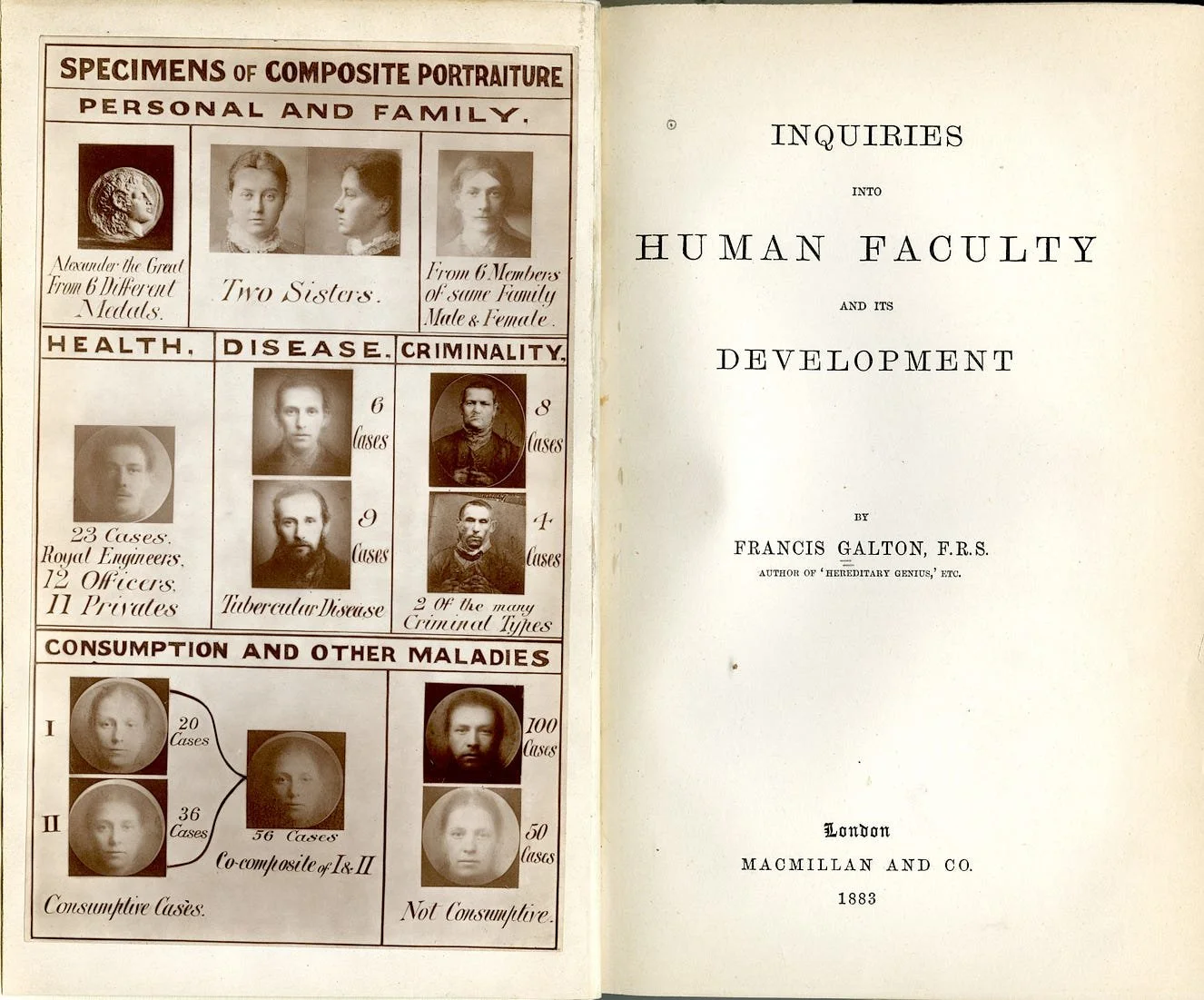
Inquiries into Human Faculty and Development, 1883
Galton’s contemporaries were skeptical. Hereditary Genius scrambles together complex mathematics and statistics with blanket assumptions and wild guesses. But Charles Darwin, at least, was impressed; in his book The Descent of Man he wrote: “We now know, through the admirable labours of Mr. Galton, that genius . . . tends to be inherited.” In his follow up book, Inquiries into Human Faculty and its Development (1883), Galton invents the term “eugenics” to describe this active improvement of humanity through selective breeding. A new pseudo-science, racialism wrapped in the trappings and rhetoric of rigorous science, was born. To understand how “white families should have more children” became the Great Replacement, we need to look at the work of a German doctor named Alfred Ploetz.
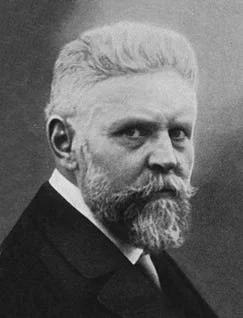
Alfred Ploetz
Alfred Ploetz was born in Germany in 1860. I’ll have to pass over his early years as well, though I will mention that he became committed to racist eugenics in his 20s and became a medical doctor at the age of 30.
While Francis Galton was receiving accolades for his eugenic ideas in Britain, Ploetz was quietly reshaping the future of eugenics with his 1895 book The Efficiency of Our Race and Protection of the Weak. Galton wanted governments and nations to encourage the best families to have more children; Ploetz emphasized the importance of preventing so-called degenerates from breeding. Marriages and children, he wrote, should only be allowed by society and the state. For the sake of the nation the sick, the weak, the disabled, twins, and those whose parents were too old or too young should be, in Ploetz’s words, “eliminated.” Ploetz’s ideas were the logical end point of Galton’s eugenics. Whereas Galton was content to rhapsodize about a better world through elites having large families, Ploetz’s racist eugenics was how Galton’s ideas were put into practice.v1895 was also the year that Ploetz created the term Rassenhygiene, “race hygiene,” to describe his approach. It was a term that would stick as he found that the German-British-American science axis was a receptive audience for his ideas.

Grundlinien einer Rassen-Hygiene, 1895
On June 22, 1905, Ploetz founded the German Society for Racial Hygiene with only 31 members, but two years later it had grown to the point where it renamed itself the International Society for Racial Hygiene. Its goal, according to Ploetz, was "for society to return to a healthy and blooming, strong and beautiful life.” The Society received strong support from the German imperial government, and their ideas began to take root elsewhere, as similar societies formed in the United States, Sweden, the Netherlands, and Britain. The United States was especially interested in applying “race hygiene” to a specific problem: immigration.

Between 1870 and 1900, twelve million immigrants settled in the United States. It was the largest influx of immigrants in US history to that point. They were mostly from Germany, England, Ireland, Scandinavia, and China, the latter of whom had already been coming in large numbers to work on massive railroad projects in the Western US. 70 percent of these 12 million immigrants came through New York City, and if they didn’t settle there, they usually traveled to other urban centers like Chicago or Philadelphia to look for work.
These new arrivals were treated badly. The public and private sectors discriminated against them, which in turn kept them in a state of economic insecurity at best and hunger and poverty at worst. They were thus stereotyped as dirty, lazy and stupid, which encouraged discrimination against them, forming a feedback loop of bigotry. “Anglo-Saxon” white Americans were deeply anxious that their bloodlines would be diluted and eventually erased completely by the sheer numbers of these physically diseased and inferior specimens, especially those from Italy, Greece, Spain, or Central Europe. This centuries-old anxiety about vice and degeneracy as a moral and physical contagion could now be validated by the discourse of science and medicine, via the scientific literature and professional associations devoted to eugenics.
Madison Grant
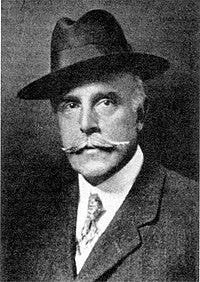
White American anxiety over immigration was the perfect moment for Madison Grant. His book The Passing of the Great Race was published in 1916. It was the most popular and influential book on race science before World War I. It was the first true expression of Great Replacement rhetoric, with Adolph Hitler admired Grant’s work though he preferred the term Aryan to Nordic. In 1930s Hitler wrote Grant a fan letter where he called The Passing of the Great Race “his Bible.”
Madison Grant brought the eliminationist racism at the root of Ploetz’s eugenics to the forefront of American discourse. In Grant’s 1916 version, the superior Nordic race is under threat by immigrants from southern and eastern Europe. “A rigid system of selection,” he writes, “through the elimination of those who are weak or unfit – in other words, social failures, would solve the whole question in one hundred years, as well as enable us to get rid of the undesirables who crowd our jails, hospitals, and insane asylums.” He thought that “unfavorable” races should be segregated into ghettos, overseen by public health officers given absolute power. This would prevent the superior Nordic race from committing “race suicide” by marrying and having children with inferior races.
At the very time The Passing of the Great Race was published, the supposedly superior white Europeans were slaughtering each other by the hundreds of thousands. The Great War interrupted the German side of the eugenics axis, but in the United States, the war would be the final piece that transformed the US into a full-fledged eugenicist republic.
Lothrop Stoddard
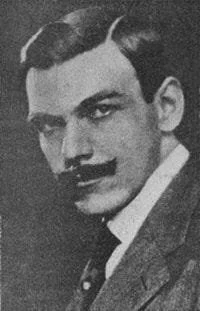
In the aftermath of the Great War, a wave of xenophobia swept across Europe and America. A wave of violent racism directed against African-Americans, Jews, and ethnic minorities swept the country; late winter through early autumn of 1919 came to be known as the Red Summer because so many hundreds of black Americans were attacked, lynched, or murdered across the US by rioting white Americans. It was also the first Red Scare, when Americans became paranoid about the influence of Bolshevism and Anarchism infiltrating the US — not only through Jewish and Italian immigrants but also African-American labor organizers and civil rights leaders. The Klu Klux Klan had been re-founded in 1915 and now its numbers swelled. Perhaps the most prominent member of this new Klan was Madison Grant’s protégé, Lothrop Stoddard.
Stoddard’s 1920 book The Rising Tide of Color Against White World-Supremacy made Grant’s racist theories of the white civilization against non-white barbarism even more popular. Stoddard’s book The Rising Tide of Color Against White World-Supremacy But things had changed in just the four years since The Passing of the Great Race —whereas Grant was concerned with the Nordic race diluting its purity by mixing with those from the Mediterranean or Russia, Stoddard focused his racist ire on black Americans and the poor.
Stoddard was also a member of the American Eugenics Society. Founded in 1923, it was mostly made up of 28 state committees that used state fairs to popularize the concepts and practice of eugenics. In addition to these efforts, the AES also lobbied for the wider use of intelligence tests on students and immigrants to the US. But at this point the lobbying was almost unnecessary, as the US government had was determined to restrict immigration to almost nothing, thanks to the work of American psychologist Robert Yerkes.
The Great Replacement paranoia was now codified into federal government policy over immigration and sterilization (since the Buck v. Bell case), the latter of which is a huge topic I can’t cover here. To understand how this all connected with the backlash to Roe v. Wade, we have to fast forward to the 1970s. I’ll cover that and more in part 2.