Gallery of the Body
Spirits, golems, robots, and cyborgs
Note: this was originally posted to my Substack on Aug 5, 2022. I deleted that Substack a couple years ago and I’m posting these here so they don’t get lost.
Divine Bodies: Spirits
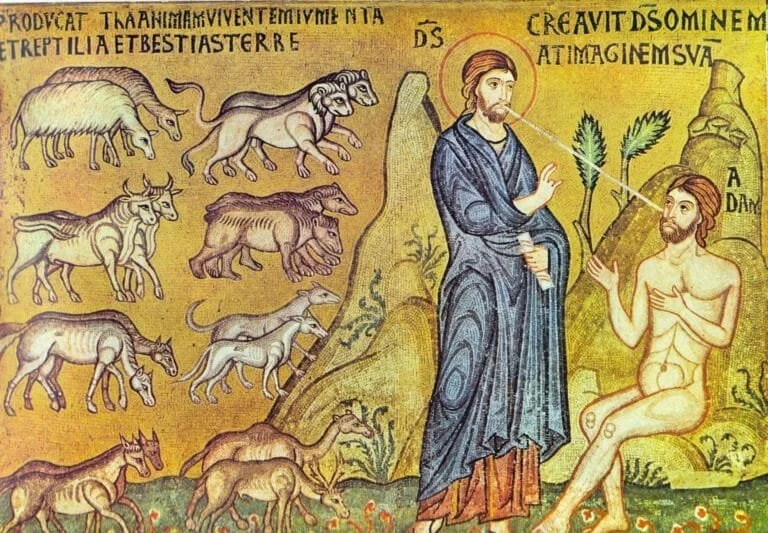
It is said that when the Creator was done fashioning a clay vessel in its own image it breathed into it the spirit of life; and the vessel in turn breathed its first breath into the body of the Creator. Their mutual breathing formed a shared circle of the spirit, suspended between the two. This shape is the realm of the human, a sphere in which the circumference is nowhere and the center is everywhere. This is the intimacy of our universe. It opens and closes, expands and contracts, to the rhythm of our spirits.
Two years ago a seizure bloomed into me without warning. My mind flickered out of existence for several minutes. Then there were serious people hovering over me asking me “who are you” and “do you know where you are” which was ironic because these were precisely the questions I wanted ask them. I was brought to the hospital and because it was the early days of the pandemic — it would be months before a vaccine was even tested — all the doctors and nurses were wrapped in plastic and protected by clear face shields. All of us wore masks the whole time. When I tested negative for COVID (which meant waiting for lab results) we could all, so to speak, breath easy.
We all know COVID spreads through infected air — it’s a literal sickness of spirit, a corruption of respiration. Instead of COVID I had contracted a metaphorical illness of spirit, a malaise of the mind. My neurologist told me that three seizures in a row meant I had epilepsy. I would have to take medication to control it, which meant I couldn’t drink alcohol anymore. By state law, I couldn’t drive. I had to stay off ladders and other places where I might fall. For a few weeks I thought the seizures, or spells, or episodes, had run their course. I was barely past the starting gun.
I wanted to believe that the problem was some flaw in my brain that we could locate, diagnose, and repair. The trouble was, the CT scans and the MRI and the three-day ambulatory EEG (where I was constantly on video) all showed the same result: nothing. There was nothing wrong with my brain. The seizures continued.
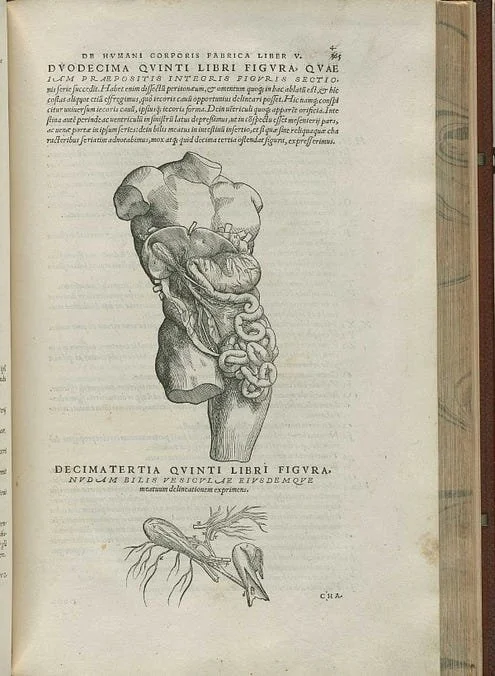
The brain is an organ among other organs (see below) but the spirit itself, that which thinks and laughs and makes art about our organs and seizures and breathing, is ensouled matter, something adjacent to the brain but not identical with it. If my brain-organ was untouched, perhaps the actual malady had all along been incubating in my spirit-body until it was finally ready to hatch.
Vital Bodies: Golems
Many and long were the conversations between Lord Byron and Shelley, to which I was a devout but nearly silent listener. During one of these, various philosophical doctrines were discussed, and among others the nature of the principle of life, and whether there was any probability of its ever being discovered and communicated. They talked of the experiments of Dr. Darwin, (I speak not of what the Doctor really did, or said that he did, but, as more to my purpose, of what was then spoken of as having been done by him,) who preserved a piece of vermicelli in a glass case, till by some extraordinary means it began to move with voluntary motion. Not thus, after all, would life be given. Perhaps a corpse would be re-animated; galvanism had given token of such things: perhaps the component parts of a creature might be manufactured, brought together, and endued with vital warmth. — Mary Shelley, preface to Frankenstein (1831)
After my first couple seizures the medical doctors I was working with were convinced I was having a heart problem. Diagnosing illness is a puzzle designed to test pattern recognition, and heart problems matched the pattern: some family history, middle age, not obviously fit, sedentary job. Just to make sure, I had to pass some tests, and here is where the doctors began to lose their patience with me. I tested my stamina on a treadmill, which only demonstrated my ability to perspire. I was injected with warm dye and scanned by a large computer. My chest was injected with bubbles. An ultrasound tech (who happened to be my neighbor) sent sound waves into my neck and commented that I had “lovely carotids.” Finally I wore a machine on a sash which recorded every twitch of my heart for weeks. In the end it was nice to know my vascular system was doing fine, but that was all I knew.
The human body is an awe inspiring evolutionary result of a process that tends to keep reinventing the crab. It’s also a fussy assembly of individual organs and systems which often as not wears out, malfunctions, or self-destructs. Any particular organ might one day decide out of the blue that is has simply had enough of cleaning up booze or dissolving cheese. A bird’s egg, on the other hand, is a superior biological design. Instead of ambiguously-shaped, porous, rubbery skin, the egg has the bold clarity of a hard shell. Instead of a parliament of organs, the egg is a tidy pocket of liquid surrounded by a satisfying edible sac of more liquid. It’s true the egg is brittle; it can’t survive a sharp enough impact; but then again that’s true for all of us.
The human body is a single body made of smaller bodies, individual parts fused together and electrified to life like Frankenstein’s monster: a kind of golem. The most famous golem is the golem of Prague, a creature made of stuck-together chunks of clay and brought to life by the great Rabbi Loew. The clay was animated when a slip of paper containing a mystical phrase was placed in the golem’s mouth; when the paper was removed the golem returned to quiet matter. A human body is a golem of flesh and blood, parts grouped together with the mystical paper held in our mouth, paper which could be easily snatched away.
If you doubt that we are vital pieces functioning as a whole: In 2016 a biological research study showed that about half of our body is made up of human cells and the other half is made up of trillions of non-human microorganisms. Some are bacteria, some are archaea (primitive bacteria without even a nucleus), some are fungi. A human body needs this microbiome to survive because even on the cellular level our golem-body is a living quilt. And of course we have ample room to weave in coronaviruses.
Material Bodies: Robots
All unintellectual labour, all monotonous, dull labour, all labour that deals with dreadful things, and involves unpleasant conditions, must be done by machinery. Machinery must work for us in coal mines, and do all sanitary services, and be the stoker of steamers, and clean the streets, and run messages on wet days, and do anything that is tedious or distressing. At present machinery competes against man. Under proper conditions machinery will serve man. There is no doubt at all that this is the future of machinery, and just as trees grow while the country gentleman is asleep, so while Humanity will be amusing itself, or enjoying cultivated leisure – which, and not labour, is the aim of man – or making beautiful things, or reading beautiful things, or simply contemplating the world with admiration and delight, machinery will be doing all the necessary and unpleasant work. - Oscar Wilde, The Soul of Man Under Socialism (1891)
If you spend any time at all in hospitals you’ll observe the frictionless interface of flesh, plastic, and metal. From the first hand-axe to now human technology was designed for our bodies; medical technology is marvelously manufactured to be our bodies. As I watched nurse after nurse prick me with IV needles it occurred to me that the IV tube wasn’t just connecting to my veins, it was itself a vein. My technological body is a modular, hybrid body. The only part that can’t be modified and swapped out is my brain, which happens to be the piece that is the whole problem.
Our terms for this problem are all founded on the concept of ability: disabled, differently abled, able-bodied. The question is: “able to what?” and the answer is “to perform work.” Almost all of American life is defined by our relationship to our labor; health is no exception. In our society we use “health” to measure our (literal) fitness for work — we work to get wages so that we can afford to optimize our health and feel good so that we can perform better, more efficient work. This is what corporate “wellness” is about. If this sounds sophomoric consider how we talk about disabled, fat, and neurodivergent people. They are “unhealthy,” so they must have made bad choices somewhere (especially regarding diet and exercise); otherwise they would be fit and well and not dependent on the labor of the healthy ones for support.
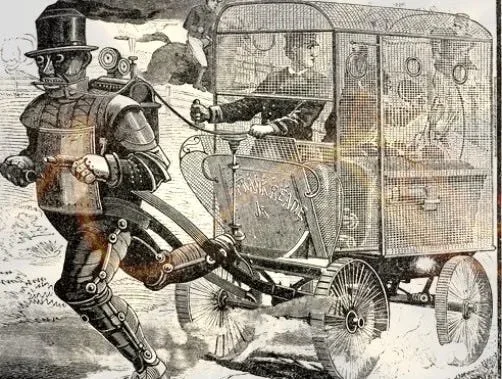
The English word robot comes from the Russian word robot or roboti (робот, роботы), which literally means work. The healthy American laboring body, the robot-body, is a sleek technological thinking/working machine that looks properly maintained. It is also designed to be a killing machine depending on the programming. The American robot-body is hard and strong and merciless, but like that brittle eggshell it’s also prone to fracture.
COVID caused a total breakdown at the US robot factory. Millions of Americans’ bodies stopped working properly. It might sound like a dumb metaphor but there are so many thousands who, regardless of politics, believe they are healthy because they deserve to be. To them COVID was a plot to poison them, or harm their children, or subvert their right to force the lesser robots into servitude. As one popular trope has it, only the unhealthy would die, and it was because of their “comorbidities.” If their robot bodies did need a tune-up they would only do it using the tools of their choice, not the ones for the unhealthy masses. Meanwhile the leaders who could have shut everything down for repairs lost their nerve and just couldn’t do it. A million-plus deaths later, the bodies that remain have to keep the engines running.
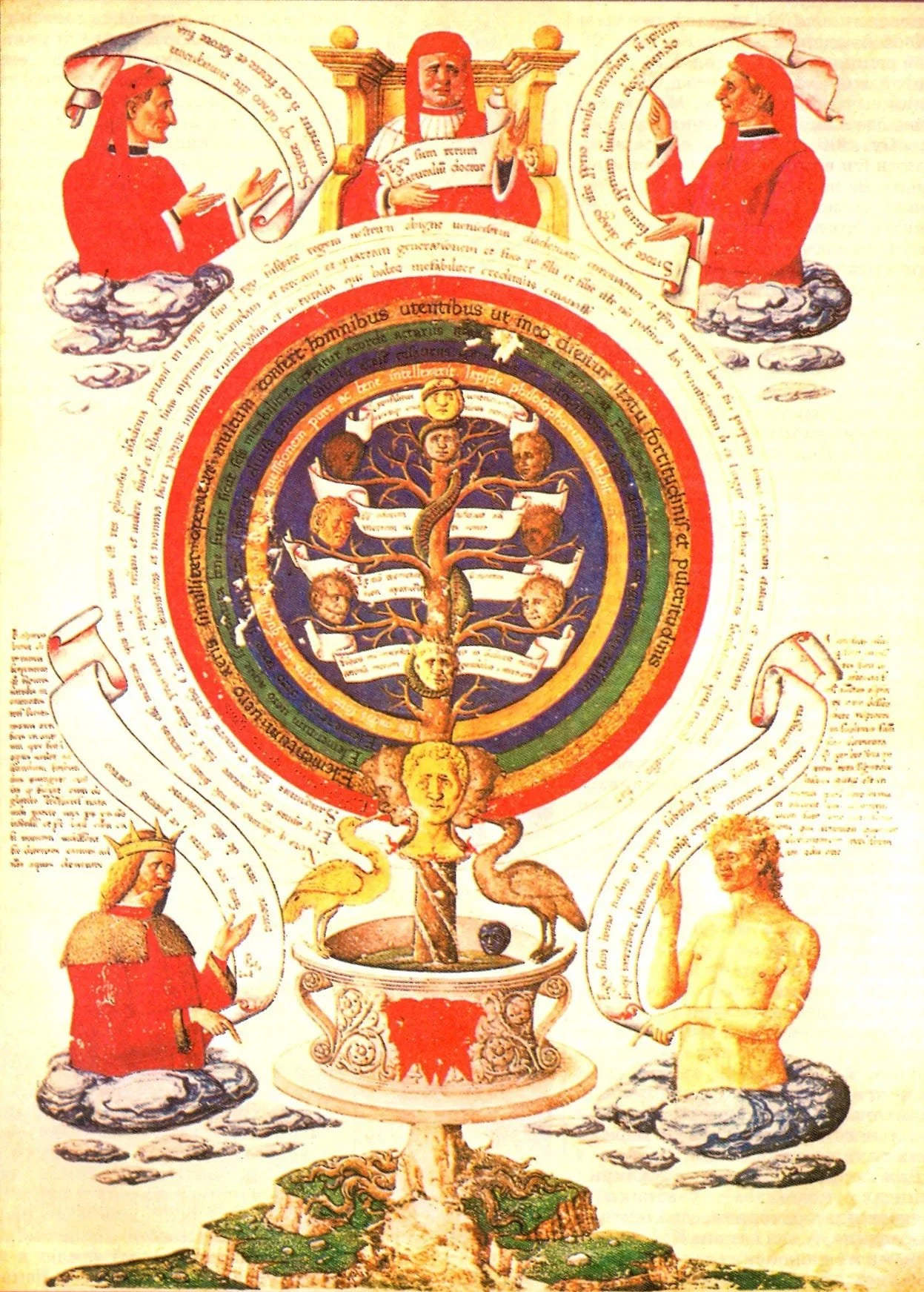
Ecological Bodies: Cyborgs
Selves, as opposed to snowflakes, can learn by experience, which is another way of saying that … they can grow. And this, in turn, is another way of saying that selves think. Such thinking need not happen in the time scale we chauvinistically call real time. It need not happen, that is, within the life of a single skin-bound organism. Biological lineages also think. They too, over the generations, can grow to learn by experience about the world around them, and as such they too demonstrate “scientific intelligence.” In sum … it makes sense to treat both lives and thoughts as “living thoughts.” — Eduardo Kohn, How Forests Think (2013)
I still don’t know exactly what causes my seizures, or even if they are truly epileptic seizures or some other kind of seizures. I don’t have enough information, which is really the heart of my whole problem. Every human body is full of information, like I saw at the hospital — everything about a body can be translated into information so it can be weighed and measured. As far as the physical universe is concerned, energy is information (just different types, like gravity, magnetic energy, photons, etc.) and matter is just temporarily condensed information. Corporeal bodies like ours aren’t just sources of information, they are information, just like everything else. On the other hand, just because that’s true doesn’t mean all the information has been decoded or even discovered yet.
When people use the term “cyber” they usually mean humans that have merged with technology and/or machines, but we covered that already. The ancient Greek word kybernetes (κυβερνήτης) is where the prefix “cyber-” comes from. The word means pilot, helmsman, or governor (it’s a cognate of the Latin word gubernare, as in gubernatorial). It was first used in our modern sense by Norbert Wiener; he meant it to describe a kind of information flow where (for example) the “pilot” would be send out information about where the ship should go, then would receive constant feedback about how the course was changing, and so constantly adapted and corrected. Information, the feedback and response, is the essence of cybernetics. If we follow this metaphor through it would be easy to assert that a human body is an information system — a flesh/bone golem-body; a social/laboring robot-body; and a cyborg-body giving information feedback to the governing spirit-body, who continuously guides the whole. I think it’s more complicated than that. I have to go beyond human bodies to explain why.
The Earth is full of living information systems that run without a pilot. Superorganisms like ant colonies, beehives, and coral; slime molds and fungi; whole forests that communicate among the trees with the wood wide web. These are all cybernetic organic systems — cyborgs — that run on the principle of self-organizing systems. These are assemblages of bodies containing bodies containing bodies; bodies all the way down to the most basic unit of organic information, DNA; and bodies up to the scale of the biosphere. In this way every living body is its own mortal ecosystem, entangled and nested within a fractally complex network of other mortal ecosystems. These ecosystems process information; they think; they know things. But for us to know what they know, we would have to understand what it’s like to be a coral reef or a rain forest, meaning we would have to actually be them. The best we can do is imagine what that would be like from a primate perspective… not really the same thing. There’s a long, long tradition in human religion of a holy person who transcends the limitations of the physical world and travels beyond into the ethereal realm of the soul and spirit. What if instead one were not to transcend beyond the ecological body, but into it? What would we learn? At that point what would knowledge itself even be?
I comprehend my own body as a convocation of four distinct, adjacent, overlapping bodies: the mind, the flesh, the social, the cybernetic. A seizure disrupts this already-unstable nexus and messes it all up. Whatever the cause, the effect is real. COVID also disrupted all our super-imposed bodies, in millions of individuals and on the scale of our entire social structure. It’s common for Americans to talk now of COVID in the past tense. Even if were true that COVID had mostly disappeared from the US population — which it definitely hasn’t — it’s been a massive seizure striking the entire country. What will it take for America’s body to reintegrate itself? COVID will be part of the US ecology-body from now on. Viruses, like any other biological lineage, can learn, and adapt, and remember. What do you think COVID has learned? What does it know about you, and me, and our world?
Bodily Remains
"History" is both a human storytelling practice and that set of remainders from the past that we turn into stories. Conventionally, historians look only at human remainders, such as archives and diaries, but there is no reason not to spread our attention to the tracks and traces of nonhumans, as these contribute to our common landscapes. Such tracks and traces speak to cross-species entanglements in contingency and conjuncture, the components of ‘historical’ time. To participate in such entanglement, one does not have to make history in just one way. Whether or not other organisms ‘tell stories,’ they contribute to the overlapping tracks and traces that we grasp as history. History, then, is the record of many trajectories of world making, human and not human. — Anna Lowenhaupt Tsing, The Mushroom at the End of the World (2015)