
The Empire of Haunted Houses
Scary stories and bad dreams in American Suburbia
Note: This was originally posted to my Substack on October 31, 2022. I deleted that Substack a couple years ago and I’m posting these here so they don’t get lost.

…When everything has disappeared in the night, "everything has disappeared" appears. This is the other night. Night is this apparition: "everything has disappeared." It is what we sense when dreams replace sleep, when the dead pass into the deep of the night, when night's deep appears in those who have disappeared. Apparitions, phantoms, and dreams are an allusion to this empty night. It is the night … where the dark does not seem dark enough, or death ever dead enough.
... And this eeriness does not simply come from something invisible, which would reveal itself under cover of dark and at the shadows' summons. Here the invisible is what one cannot cease to see; it is the incessant making itself seen. The "phantom" is meant to hide, to appease the phantom night. Those who think they see ghosts are those who do not want to see the night. They crowd it with the terror of little images, they occupy and distract it by immobilizing it -- stopping the oscillation of eternal starting over. It is empty, it is not; but we dress it up as a kind of being; we enclose it, if possible, in a name, a story and a resemblance…
In the night one can die; we reach oblivion. But this other night is the death no one dies, the forgetfulness which gets forgotten. In the heart of oblivion it is memory without rest. — Maurice Blanchot, The Space of Literature (1955)

Dawn of the Dead
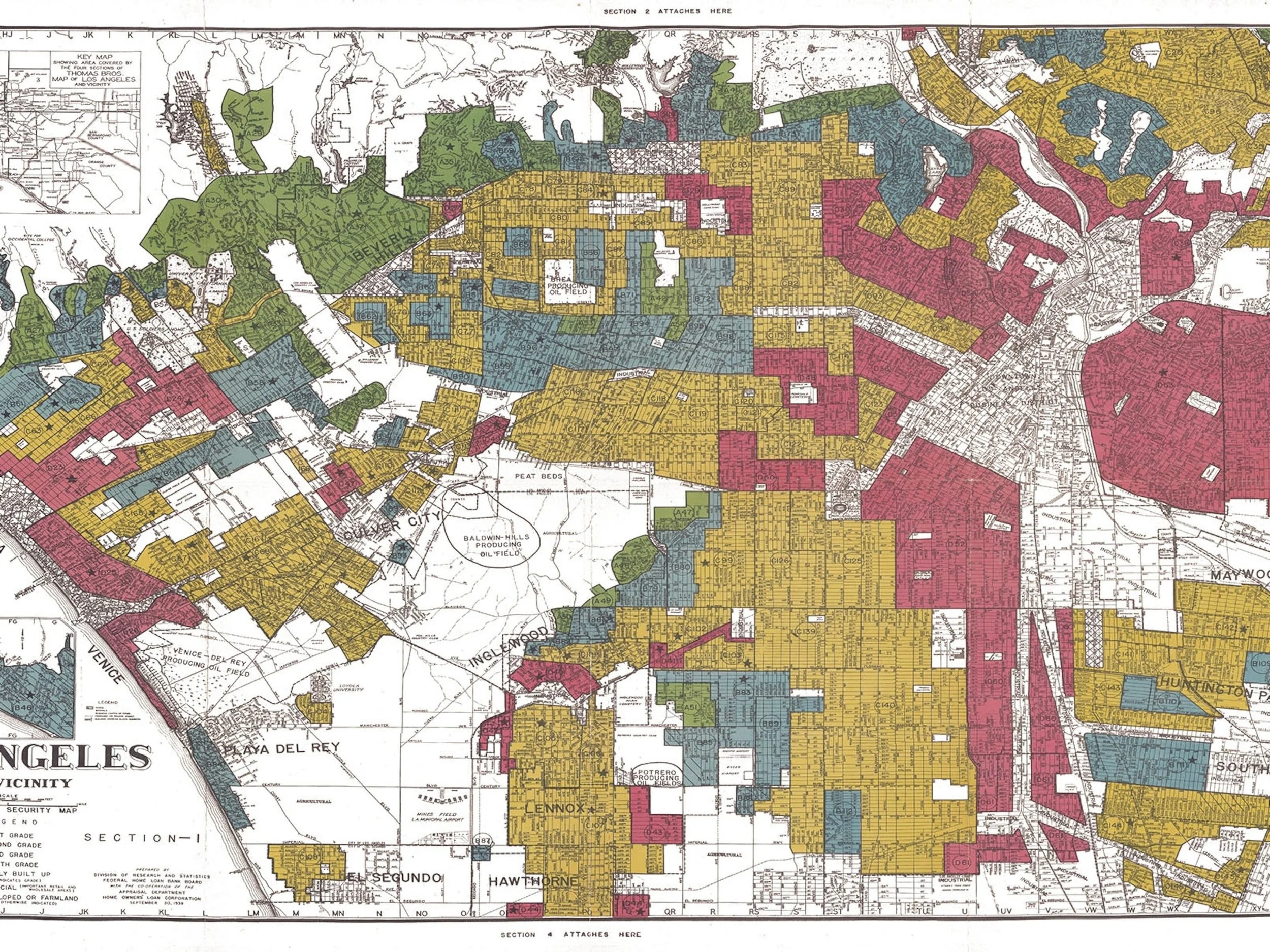
In the early 1930s, the banking sector was trying to stay afloat in the midst of the Great Depression, which meant collecting on as many debts as possible to stay solvent. When the banks tried to recover their outstanding mortgage debt, however, they found the borrowers were often unemployed or their own savings and investments had been wiped out. These mortgage defaults triggered a wave of foreclosures, collapsing the housing market and leaving the banks with numerous empty homes they couldn’t sell (similar to 2007-2008). The government responded by creating the Federal Housing Authority in the National Housing Act of 1934. The FHA was designed to stabilize the housing market by bringing national standards to mortgages and home loans. They also wanted to identify which geographical areas offered safer, better real estate investments; the FHA would underwrite loans in the “safe” areas but not in the “risky” areas, which would in turn further stabilize the market. The trouble was, no one in banking or real estate really knew what counted as “risky” or “safe.”
To answer this question, the the Federal Home Loan Bank Board (a separate agency created in 1932) tasked the Home Owners Loan Corporation with appraising the property values and risk factors in 239 cities in order to create a risk map for each city. The maps would be carved into zones that were ranked and color-coded to identify the relative risk level in each zone. The green zones were Type A, where banks could most expect to get their loans repaid. The blue zones were Type B, labeled “Still Desirable”; the yellow zones were Type C, labeled “Declining.” The worst neighborhoods for loaning money or investing capital were Type D — the red zones.
In theory this color-coded system that reflected some kind of objective financial reality. But the men who did the appraisals for the Home Owners Loan Corporation corrupted the labeling process with their own racial prejudice. The Type A neighborhoods, the green zones, were the new, whites-only suburbs on the urban outskirts, while the Type D red zones were the older, mostly black neighborhoods inside the city limits. This where the red in redlining comes from. There were no strong, or even objective, financial reasons for these appraisals beyond pure racial enmity. But the bankers’ racism was shrouded within the language of risk assessment and investment returns, which kept their consciences as clean as they liked to keep them.
Banks, investors, and municipalities immediately shifted their investment wealth and tax dollars out of the racially-diverse cities into the homogenously white suburbs. Redlining thus enshrined certain neighborhoods as designated enclaves for poor people of color. In the 1930s, for example, the city of Los Angeles had already designated South Los Angeles as a Black and Latinx area; redlining made sure the the real estate was underpriced to attract working-class non-whites and concentrate them in a geographic area. Once there, the residents of South LA found they couldn’t get access to home or commercial loans — as part of the “high risk” zone — which would help keep the residents poor and underserved. Many of the residents of places like South Los Angeles were part of the Second Great Migration. Between 1940 to 1970 more than 5 million Black Americans moved from the South to the North, Midwest and West. They were trying to escape the economic and educational dead-ends of Southern agricultural labor, as well as the brutality of Southern segregation and bigotry, only to find themselves financially and legally corralled into the red zones. Freeways were built around these areas; industrial pollution was allowed to accumulate there; police patrolled these neighborhoods like an occupying army; housing became overcrowded and dilapidated, leading to lower property values; all of which contributed to the underlying poverty, misery, and ill health of the residents. The US had entered the era of what geographer Ruth Wilson Gilmore calls “organized abandonment”:
In the United States, where organized abandonment has happened throughout the country, in urban and rural contexts, for more than 40 years, we see that as people have lost the ability to keep their individual selves, their households, and their communities together with adequate income, clean water, reasonable air, reliable shelter, and transportation and communication infrastructure, as those things have gone away, what’s risen up in the crevices of this cracked foundation of security has been policing and prison.
Now it’s not that surprising when we stop and think that if in an organized way, state and capital abandon people, something is going to arise to shape and direct what those people do who are not absorbed back into the political economy in other ways. It’s really not that surprising, though it is frightening.
So if we look then more specifically at what has happened in state and municipal budgets, we see the expansion of budgets devoted to mass incarceration, to jails, and to police. We see not only that but, in agencies that are supposed to be working toward other ends — education, health, and so forth — a rise in police functions.
One thing that we see happening, for example, is that police in schools has spread across the United States in this period. Or we can look at something as relatively technical and one would imagine benign as a student financial aid, and we see that student financial aid officers in colleges and universities have a policing function as well. Or the fact that the United States Department of Education has a SWAT team. So we see that the policing function has risen not only in the traditional agencies of the police, that is to say, police jail in prison, but also in social welfare agencies. And so it’s that twinned growth that shows us that we’ve been so thoroughly abandoned that we have to take back, we have to take back, which is to change, transform, and move to something new.
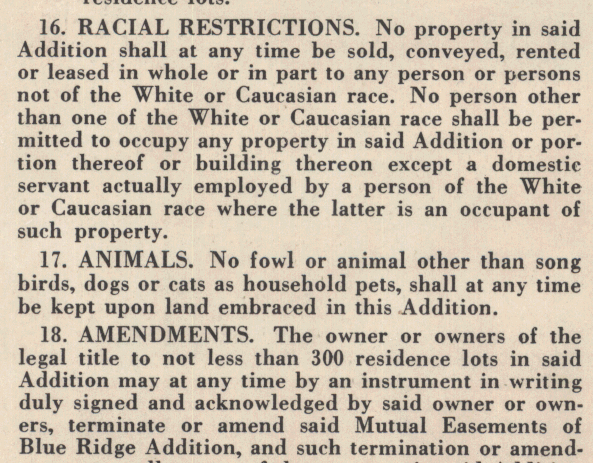
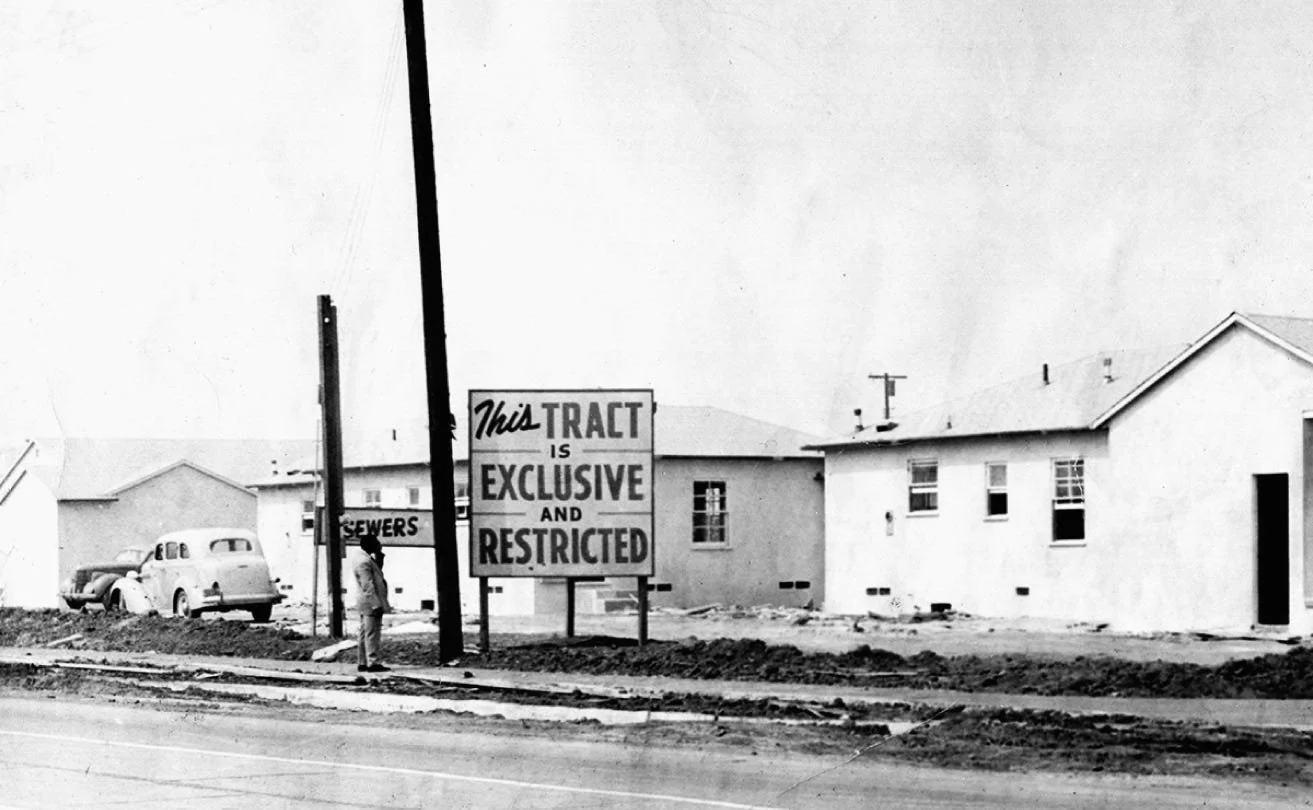
Those who were able to avoid or escape the red zones would find themselves defeated by “housing covenants,” legally valid clauses in housing deeds that restricted the sale of occupation of real estate on the basis of race, ethnicity, religion, and/or social class. Racial covenants came into use in the US during the mid-nineteenth century, but their use exploded in the 1920s and 1930s. They remained routine until 1948, when the US Supreme Court found they were legally unenforceable, though obviously racist property owners routinely found ways to deny leases to Black Americans and other minorities, as demonstrated by Fred and Donald Trump. Usually, the restrictive covenants were specifically racist towards Black Americans, but discrimination against Jews, Catholics, Asian Americans, and European immigrants was also common. It was after World War II that they moved from being a tool of Southern segregation to a way of containing minority home-buyers and renters into designated areas and, just as insidiously, permanently excluding them from vast new developments being built specifically for the other “great migrants”, the white populations steadily fleeing the urban cores.
Blockbusting was a technique used by developers and real estate companies to get white families to move out from urban neighborhoods in cities like Chicago, New York, and Philadelphia, into the developers’ new suburban developments outside those cities. The goal: rattle white property-owners so they would sell their property to developers at low prices so the developers could resell the same property at above-market rates to non-white families, making a large profit. Real estate agents would sometimes hire Black Americans to walk around the mostly white neighborhoods pushing baby carriages or even starting fights. Developers would buy vacant buildings and leave them empty, giving the impression that no one wanted to move in. The white residents would find flyers in their mailboxes advertising cash payments for homes — just in case they were thinking of selling. Non-white families living in urban districts would see the newly available housing and naturally want to buy it themselves. It was the beginning of “white flight,” a fundamental, permanent shift in the demographics, politics, and financial makeup of the United States, and the origin of the modern American suburbs.
Haunted Houses
Housing in the US reached a crisis point in the late 1940s. Houses were both time-consuming to build and expensive to buy, so unless something changed there were always going to be too few houses costing too much money to put a dent in the severe post-war housing shortage. The US government had no intention of building blocks of public housing on its own — that would cost a lot of taxpayer dollars and put Uncle Sam in competition with private home builders — so the government decided to partner with the developers instead. As a result, the solutions to the crisis came in the form of a construction revolution on the developers side, and the creation of the Federal Housing Administration on the government side.
The construction revolution was a new generation of architects and builders, mostly second-generation immigrants, using innovative techniques, standardized parts, and an assembly-line approach that would mass-produce housing without the need for skilled or unionized workers. In 1944, new houses were being built at an average of 144,000 a year; in the 1950s the average was 1.5 million a year. To facilitate the speed of this new construction, the Federal Housing Administration gave low-interest loans to builders and established basic construction guidelines and nationwide standards. The typical postwar house of the late 1940s was the “minimum house,” so named because it met the FHA’s minimum standards. These were smaller than the typical pre-war home, usually 983 square feet, with 5 to 6 rooms — two bedrooms, one bathroom, a living room, and a kitchen, all on one floor. New families found them small but up-to-date, with electrical systems wired for modern lighting and appliances. Their simplicity made it easy for them to be remodeled, so they might be updated and remodeled as needed.
The standards the FHA set for lot sizes, setbacks from roads, building materials, and so on meant these new modern mass-produced houses couldn’t be built in urban areas. New developments would be have to carved out of other spaces, often farmland or existing estates, areas that suddenly didn’t fit the definition of either urban or rural. American banks had to be willing to lend money to the people who wanted to buy these new houses in these new spaces, so the FHA created a mortgage insurance program, which lowered the risk that banks took when lending money to these home buyers. This completely transformed the American housing market for white families. Long term, low-interest loans of 25 to 30 years duration became the norm. These loans allowed many white Americans to own property for the first time, as opposed to renting.
For white Americans who could secure the loans, the fact that buying a home tied up most of their lifetime’s wealth in mortgage debt seemed a small price to pay. As long as the value of their property increased over time, it became the primary way that post-war white families accumulated wealth., Because so many were doing it, a great number of white families felt they were sharing in the post-war prosperity of a newly ascendant United States. Since the real estate could be passed down through families, the wealth was inheritable, which was also a new experience for the majority of Americans.
To reward the servicemen who made that prosperity possible, the FHA worked with the Veterans Administration to give returning WWII veterans — specifically the white veterans — extra aid in their housing purchases. This aid was part of a larger subsidy called the Servicemen’s Readjustment Act of 1944, aka the GI Bill, which also provided financial assistance for higher education costs as well as unemployment insurance. The overall goal of these policies was to create a thriving American middle class that was financially secure and highly educated.
But while the language of the GI Bill as written didn’t explicitly exclude African-American veterans from government benefits, in practice it was enacted in such a way that the economic and educational assistance flowed to whites only. In addition most banks simply would not lend money to African-Americans. Even if a black family could somehow secure a housing loan, they would find that these new communities were closed to them. Some suburban developers, like Levitt and Sons, Incorporated, builders of the famous suburb of Levittown on Long Island, New York, would not sell homes to non-whites (and sometimes excluded non-Protestants). In other areas, if a non-white family did manage to move in, they would find themselves harassed, ignored, or even assaulted by their white neighbors — with the full complicity of the local law enforcement and often the municipal governments — until they finally gave up and left. The developers and the residents justified this treatment by saying that having non-whites live near them would drive down the market value of their own homes and since all their wealth was invested in their homes, they literally couldn’t afford to allow anything that would make their homes’ financial values go down. In this way, they told themselves that, just like redlining, their discrimination had nothing to do with racism. It was just a matter of money.
The US government had already provided suburban whites with lavish handouts in the form of low-interest home loans and educational subsidies when, in 1954, President Dwight Eisenhower announced that the government would be making another such investment by building an interstate highway system. The railroad industry was starting to decline in the face of competition from trucking and air travel, and the new suburban developments were often not near established rail lines anyway. Newer cars were faster, cheaper, and more available, thanks to an expansion of consumer credit. The landscape of America terraformed itself around the automobile; entire industries sprang up to support the new car culture. This in turn accelerated the population shift from the cities to the suburbs. By the end of the 1950s, one-third of all Americans lived in the suburbs, while eleven of the twelve largest cities in the US saw their populations decline — with the once exception being Los Angeles, because it was able to design its infrastructure around the needs of car drivers. Owning a car became an essential element of suburban life; it was practically impossible to live there without one.
The automobile was essentially suburban in another way: it was relatively private. A driver had some sense of privacy, just like the detached single-family homes of the suburbs put a modicum of space between each neighboring family, unlike the density and forced familiarity of the city. The social lives of the new suburbanites tried to make up for this lack of closeness with various civic organizations – social clubs, charitable groups, sports teams, churches, and so on. But mostly the social life of suburbanites outside the home was oriented around children and families. To the 1950s-1960s suburbanites, the city became the world of work and commerce, and the suburbs became the world of leisure and family, with the daily commute connecting the two worlds. Crime, disease, and social problems were part of the urban world; safety, health, and comfort were to be found at home in the suburbs.
The men and women who moved to the suburban promised-lands showed their faith in the future of America by filling their new homes with children. 4 million babies were born every year during the 1950s. It was a new kind of country: not a territory seized by genocide and rebellion; not a nation organically emerging from flows of trade and politics; not a country with fixed borders or cultures or languages; but a floating, shadow nation, its inhabitants often on the move, searching for something “good” — good property values, good jobs, good schools, good parking, good downtowns and good malls with good shopping, good churches, good hospitals, good graveyards, and a police force to keep it all “good.” The “bad” had to be elsewhere. If it looked like someplace was getting “bad,” it was time to move again.
A defining factor of a suburb being “good”: it was cheap, meaning housing was cheap and corporate, property, and individual taxes were either low or nonexistent. Cheapness was important because the successful suburbanite was above all a smart consumer. The point of owning a home was to accumulate wealth, and the point of accumulating wealth was to gain economic and social status, putting one in a position to accumulate more wealth. Legend said that if you worked hard enough for long enough and played by the rules you could attain the mythical status of rich, at which point the wealth would mostly accumulate itself. Until then, no matter how much wealth you had actually accumulated you would consider yourself middle-class, as that meant you were an average person, meaning: normal. The white suburbanites were, for the moment, the self-appointed protagonists of America. Their dreams were the American dream.
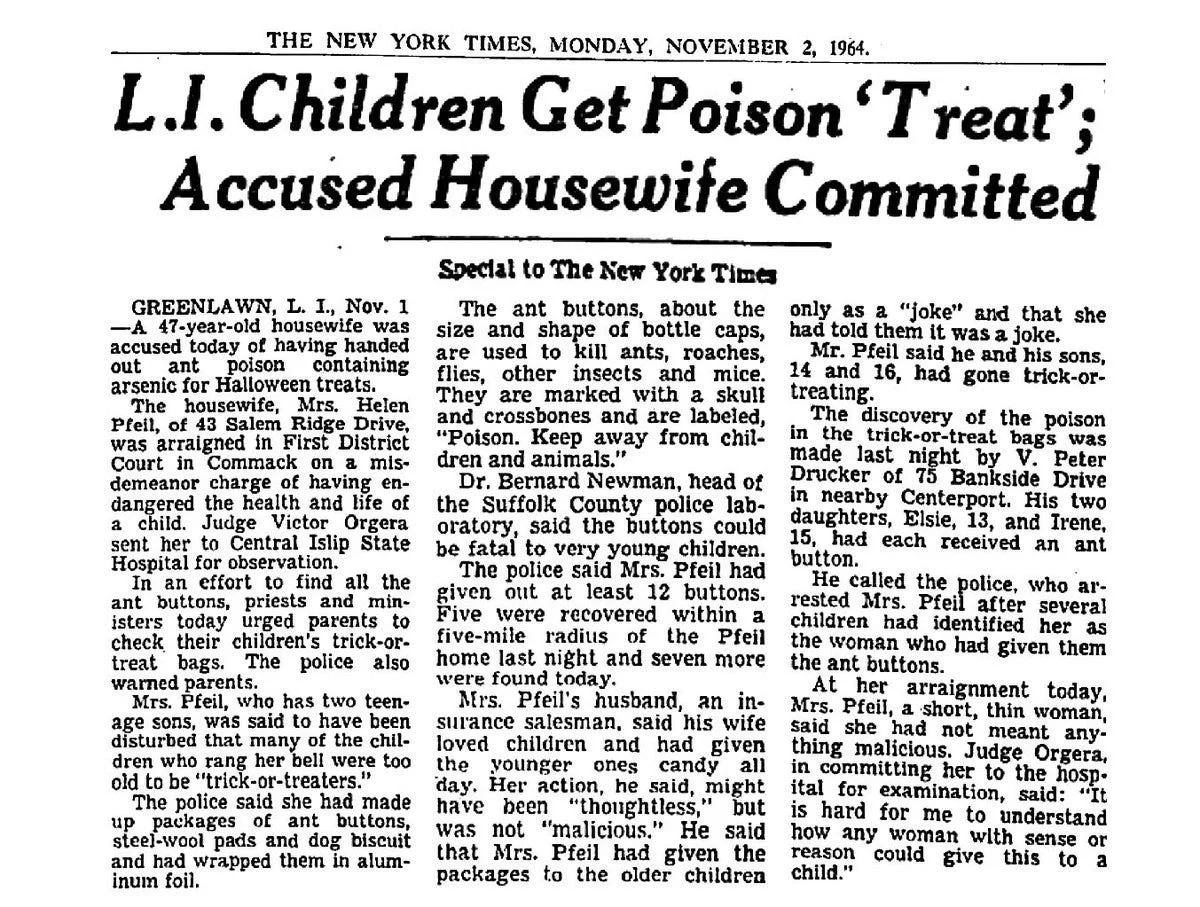
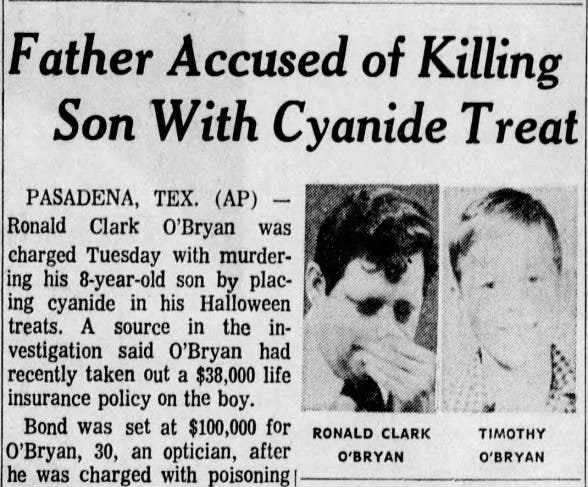
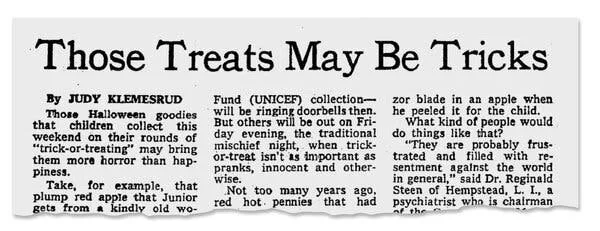
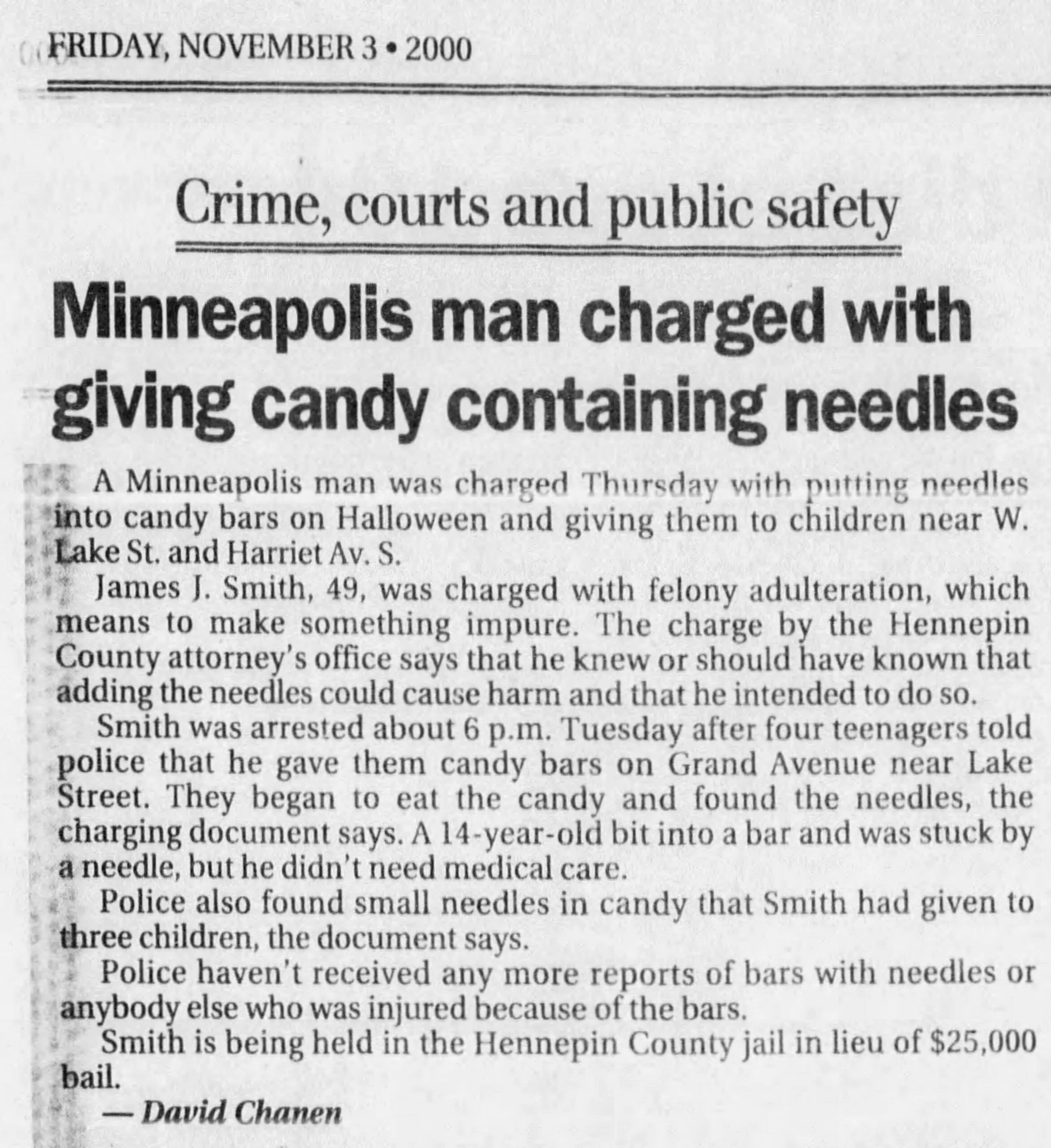
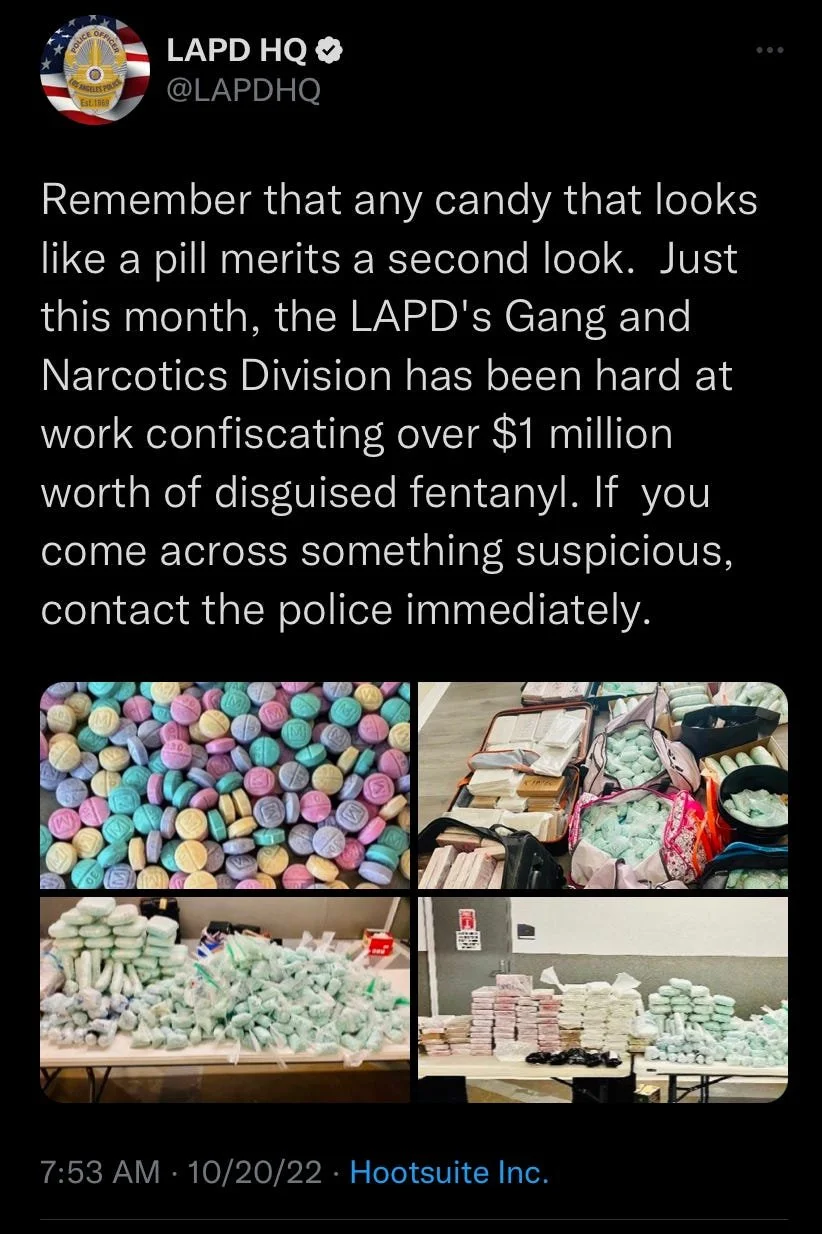
New York Times article from October 29, 1970, that helped start the contemporary poisoned candy myths.
Bad Dreams
For almost thirty years the US government had made the suburbs possible by paying for the suburbanites’ houses, cars, roads, schools, hospitals, fire engines, prisons, and college tuitions. Then, in the mid-1970s, a series of economic shocks brought the post-WWII prosperity era to a shuddering halt. American politicians assumed they could tap into the wealth that had been steadily accumulating among the suburbanites for the benefit of the very social welfare programs that had led to the creation of the suburbs in the first place. But the suburbs were defined by one thing: property (which, as Cheryl I. Harris has shown, includes whiteness). If the suburbanites had anything, if they were anything, if they could be anything, it was property — houses, cars, other assets as capital property, families as patriarchal property, racial status as social property. Anything that threatened the value let alone the possession of that property was a threat, and a threat to them was a threat to the “real” Americans and thus a threat to America itself.
Not only would the government keep paying, the money wealth would now flow away from the urban areas generating the resources and towards the suburbs where it would collect and disperse into consumption (and debt). White suburban rage erupted against the government and the racially-diverse cities in the late 1970s in the form of tax revolts, busing protests, and a general backlash against the civil and human rights gains of the previous 40 years. Birthed as they were in racial capitalism and steeped in a culture of nostalgia, the suburbs were a comfortable fit for the mailing-list con-game conservative politics pioneered by Richard Viguere. But it was a strange “conservativism” as there was nothing to “conserve,” no traditions to protect, not even ideas to argue about, just phrases that politically speaking are barely concepts: “private enterprise,” “the border,” “traditional values,” “small business,” “small government,” “law and order.” The suburbs were the land of private desires, not civics. Suburbanites had no politics, but they had an unshakable ethos — individualism. It was a kind of negative politics; the very existence of a governing body, indeed the very political process itself, was an unfair imposition on the sovereignty of the white, self-directed ego.
Despite the suburbanite politics-against-politics, the electoral maps were drawn — and continually redrawn — to ensure the suburbs always had more than their fair share of influence. But what did they want with power? What would they use it for, besides keeping their zoning restrictive, their parking plentiful, their taxes low, their police on the attack against racial and economic intruders? What did the suburbanites want America to be? Was it "Reaganism,” that vague public populism founded on amoral economic austerity, manic militarism, and religious fanaticism? Or was that rather a suburbanite attempt to create a sense identity — what it “meant” to be suburban?
The problem with trying to create a new American identity as a nation of suburbs is that post-war suburbia has no history. Or rather, the history is: the suburbs were conceived, designed, built, and dwelled-in as a massive experiment in racial-economic exclusion, a conjunction of economics, demographics, geography, and white supremacy — but this true history is totally unacceptable to suburbanites as history. The true history of the suburbs was indigestible; the suburbanites spat it out. Instead of a history, they would have a series of competing obsessive stories: urban legends, rumors, patriotic myths, celebrity lives, media narratives. Instead of a past, they would have a series of competing compulsive presents: consumer trends, diets, fads, cars, cults, mass entertainments, their own synthetic religions, their own ersatz economies. The kind of self-authored reality-field every utopian community wishes for.
So why had their dreams become nightmares?
Spooky Stories
The suburbs had been a natural breeding ground for mistrust and suspicion since the early days during the Red Scare in the 1950s. In the wake of the shocks to the system of the mid-1970s, that suspicion twisted into ambient paranoia. Their individualism left them easy prey for roving murderers, which in turn made them even more fixated on their self-image as constant potential victims of crimes. Meanwhile, the crimes represented by the suburbs themselves lurked unacknowledged in plain sight. The place that was no place wanted a history that was not its real history, and the result was starting to breed monsters.
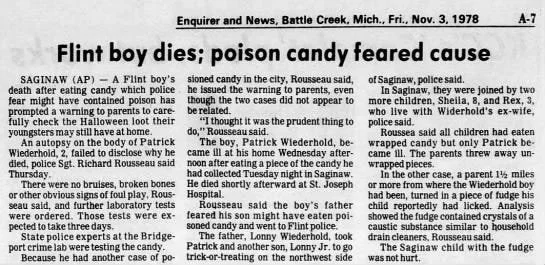
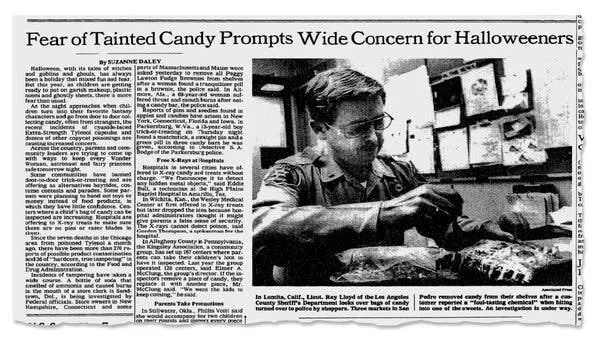
The suburbs of the 1980s grew darker. The neoliberal economics that helped give the suburbanites their disproportionate wealth started to turn back upon them. The companies that employed the suburbanites became global multi-national corporate entities and suddenly questioned the need for “redundancies” among their white-collar managers. They were more alienated from their work, their neighbors, even their own loved ones. It’s no coincidence that in the 1980s suburban fear fully bloomed. Real events like the Chicago Tylenol murders were implanted into the suburban subconscious, expressed as a stream of urban legends. They were especially convinced their children were constantly under threat; some of those threats were real, some were phantoms. At the same time, their egoistic non-politics led to led to a massive increase in income inequality in the US, redistributing wealth upward and causing social conflict that continues to the present.
In the 1990s the global economy finally came to cannibalize the suburbanites’ wealth. It was organized abandonment on a planetary scale and the suburbs weren’t spared. But the fabrication of the conservative self-image as a besieged suburban homeowner was complete; they were not about to denounce the economic status quo even as it drained away their affluence.
The suburbanites wanted to take out their rage on Black Americans, as they had always done, but this got them dangerously close to that true history they couldn’t stomach. Instead they fell back on the post-1970s language of “crime.” It made them feel good to fill the prisons, then build more prisons and fill them, and keep going until America had the most incarcerated people in the world. There was now a media apparatus that constantly reflected their own self-image back at them; it made sure to keep them on an anxious edge. The suburbanites rejection of their own true history had left them vulnerable to believing their own fantasies — now “media” and “reality” were merging and their children were, of course, in more danger than ever before. They were steadily losing their grip and would never regain it again.
Scary Movies
The decline of the suburbs during the rise of the Internet became the end of American politics as an expansion of wealth or possibility. It was replaced by the shrinkage of the imaginable future into smaller and smaller escape routes. The white suburbanites gaze at their personal screens and casually absorb a constant stream of conspiracy and fear. Their non-politics has curdled into jocular bloodthirst for their enemies and egoism unto death. The American suburbs, a place that was always no place, is now the no-place that is inescapable in America.
The philosopher Frederic Jameson wrote:
History is what hurts, it is what refuses desire and sets inexorable limits to individual as well as collective praxis, which its "ruses" turn into grisly and ironic reversals of their overt intention. But this History can be apprehended only through its effects, and never directly as some reified force. This is indeed the ultimate sense in which History as ground and untranscendable horizon needs no particular theoretical justification: we may be sure that its alienating necessities will not forget us, however much we might prefer to ignore them. - The Political Unconscious: Narrative as Socially Symbolic Act (1981)
Maybe another way of putting it is like this:
History is what hurts. Those who think they see ghosts are those who do not want to see the night. They crowd it with the terror of little images, they occupy and distract it by immobilizing it -- stopping the oscillation of eternal starting over. It is empty, it is not; but we dress it up as a kind of being; we enclose it, if possible, in a name, a story and a resemblance.