
Under an Evil Hand, Part 1
The origins and first days of the Salem Witch panic; the Clown Sightings of 2016 and beyond.
Note: this was originally posted on my Substack on Sep 22, 2022. I deleted that Substack a couple years ago and I’m posting these pieces here so they don’t get lost.
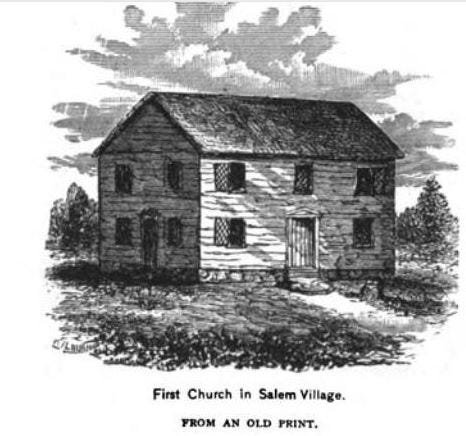
The Devil Rides to Salem Village
In the cold mid-winter of 1692, in the middle of January, in the house of the Reverend Samuel Parris, in the Puritan settlement of Salem Village in the Massachusetts Bay Colony, a young girl - about eleven or twelve years old - was sick. Her name was Abigail Williams. Apart from her name, and the fact that she was probably Reverend Parris’s niece, we know almost nothing about her. We know her sickness was strange and terrifying, and apparently contagious; soon Betty Parris, the Parris’s daughter, also fell ill with the same strange sickness. A visiting clergyman named John Hale said that the two girls were “bitten and pinched by invisible agents, their arms, necks, and backs turned this way and that way, and returned back again, so as it was impossible for them to do of themselves, and beyond the power of any epileptic fits, or natural disease to affect … Sometimes they were taken dumb, their mouths stopped, their throats chocked, their limbs wracked and tormented.”
For weeks Samuel Parrish and his wife Elizabeth consulted various doctors, but none could help, while the girls only got worse. In the middle of February a doctor named William Griggs proclaimed that the children were, as he put it, “under an Evil Hand.” They were victims of witchcraft. This was humiliating to Reverend Parrish, because it implied that he, the spiritual leader of Salem Village, was not pious enough to keep the devil away from his own home.
Revered Parris was not well-liked in Salem Village. He often preached about the importance of church membership when three-fourths of the Villagers were not full church members. The Puritans believed that only God’s chosen, the elect, should be church members, so members of the community had to apply for church membership. Every applicant had to personally testify to their own experience of God, writing out their own story of conversion in an autobiography. The organized church in Salem Village only had 27 members, including Samuel Parris - an exclusive group. The other Villagers had to leave the meetinghouse after the sermon was over; on sacrament days, they couldn’t get their infants baptized unless they had at least one parent who was a church member; they weren’t even considered full citizens within the colony. By 1691 the Villagers were fed up with Parris. They stopped contributing to his salary, they stopped supplying him with firewood, they tried to get him removed from the church. And when they heard that the devil himself had infiltrated the Parris household, they believed it.
A woman named Mary Sibley lived near the parsonage and saw in person how the children suffered. But instead of fasting and praying to God, she decided to fight magic with magic. The Parris family had two slaves, both American Indians, a couple named Tituba and John. Mary Sibley told them to make her a witch cake - a cake mixed from rye meal and urine taken from the two girls, Abigail Williams and Elizabeth Parris, then baked in ashes. Mary believed that if she fed it to the Parris’s family dog, the identity of the witch afflicting the girls would be revealed… and it worked. After the Parris’s dog ate the witch cake, the girls cried out that the witch was Tituba herself, “she did pinch, prick, and grievously torment them … they saw her here and there, where nobody else could.”
Samuel Parris was stunned, angry, and confused. He went to other ministers and local men for help. They agreed the girls were bewitched and they advised him to pray and be patient. But they also questioned Tituba herself. She was not from New England, but probably from Florida or the Georgia Sea Islands, and she claimed that while “she herself was not a witch” her “mistress in her own Country was a Witch” and had taught Tituba some good magic. By the time the local authorities learned all this, two more girls had come down with fits. One of them was Ann Putnam (usually called Ann Putnam, Junior), the twelve year old daughter of two church members, Thomas and Ann Carr Putnam. The other was Betty Hubbard, the maidservant of doctor William Griggs, the same doctor who said that Abigail Williams was “under an Evil Hand.” She was also seventeen years old, which meant that (since she was over fourteen) she could legally testify in court.
What the girls were saying was truly frightening. Not only Tituba but two other women in Salem Village were witches - Sarah Osborne and Sarah Good. Sarah Osborne was 49; after her first husband died she married a young servant man and purchased his indenture, which was considered scandalous; then she got involved in a prolonged dispute with the father and uncle of Thomas Putnam, the father of Ann Putnam, Jr. Sarah Good was 38, from a well-off family but now poor herself; she was known to be bitter from two bad marriages and an inheritance that was unfairly withhold from her, angry with even those who tried to help her. Other Villagers had always suspected that she used evil magic to bewitch her neighbors and their livestock; now it seemed they had proof. On February 29 based on formal complaints from Thomas Putnam and three other men, Magistrates John Hathorne and Jonathan Corwin issued arrest warrants for Tituba, Sarah Good, and Sarah Osborne.
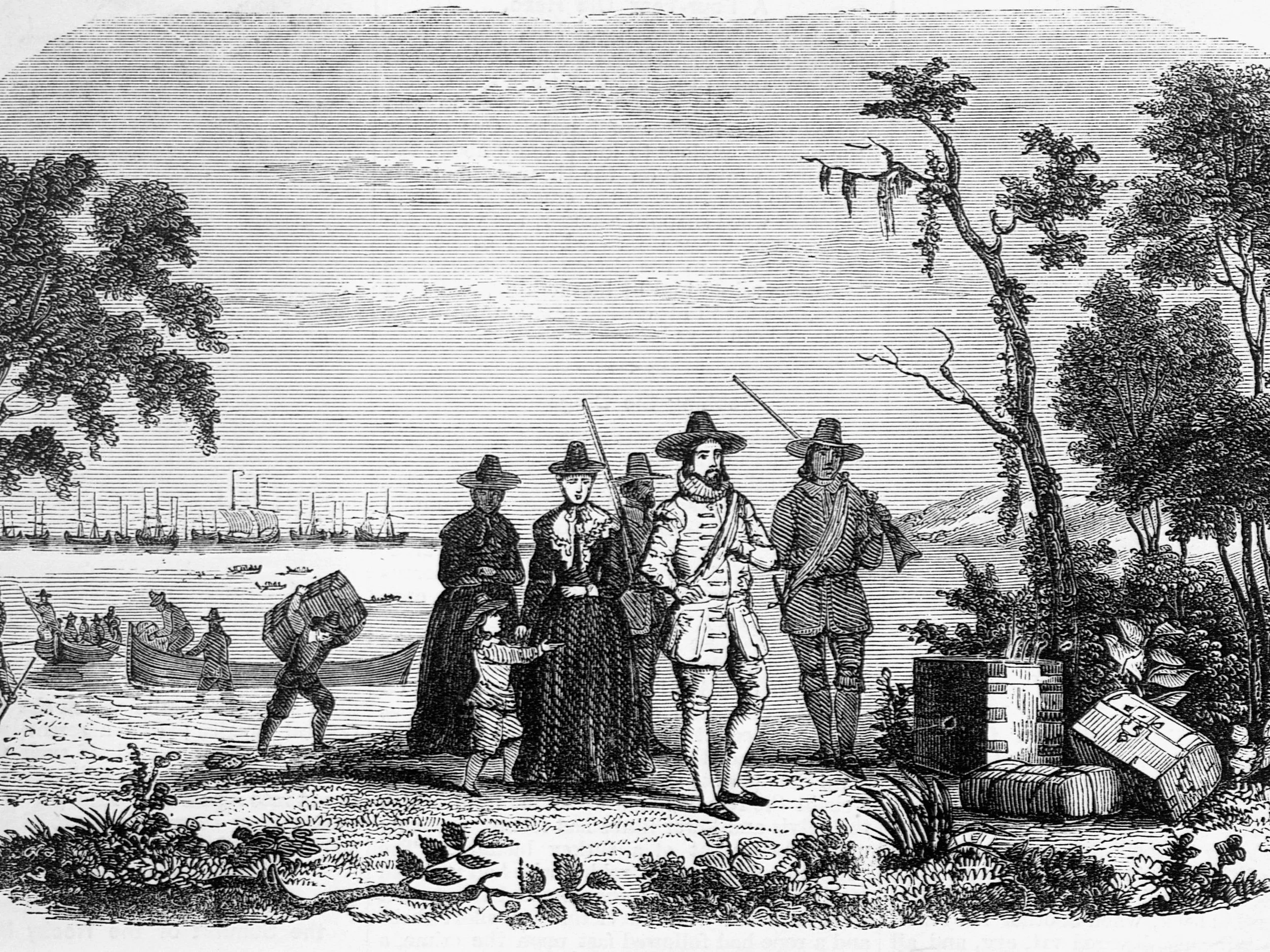
The Puritans Land in Massachusetts
When the first English Puritans arrived to create the Massachusetts Bay Colony in 1628, they knew that the land was already occupied by others. The Wabanaki, the Mikmak, the Passamaquoddy, the Maliseet, and other indigenous peoples had lived there for at least twelve thousand years. But the Puritans wanted to serve their God by founding a new land for his elect few - the true church. The investors of the Massachusetts Bay Company were, of course, concerned with profit. Unless they could be converted or forced to work for the colonies, the original occupants were an inconvenience. The American Indian population had been decimated by smallpox, brought by the first Europeans years ago. Too weak to push the Puritans back into the sea, they tried to find some advantage in their presence, especially through trade. It must have seemed the Puritans had come to extract resources to send back across the water – in Massachusetts Bay they took timber and dried fish to send to the West Indies and Europe. Perhaps the Wabanaki and their neighbors thought there was surely a limit to the amount of trees and cod that any one people could want; besides, the land was bountiful and there was enough to go around. But the appetite of the European empires was insatiable. The more they ate, the larger they became, so that their hunger only grew.
More settlers came to Massachusetts Bay only to find the early settlements like Boston and Salem had become thriving port towns and had no room for them. The local government would grant new land for new towns about 40 acres at a time, always next to an existing town for mutual support and protection. So the Puritans kept moving inland, along with the Dutch and other colonial settlers, pushing into what had been Native American territory. At the same time, the Pequot people were fighting the other American Indians to consolidate their political and trading power in the Connecticut River Valley.
In 1636 a series of violent incidents between the Pequots and the settlers became a war of raids between the two sides. The Pequots besieged Fort Saybrook until they were driven off by an alliance between the English, the Mohegans and the Narragansetts. On May 26, 1637, the English and their Indian allies attacked the Pequot fort in the village of Mistick. Almost 500 Pequot men women and children were burned alive inside the fort by the soldiers. The Pequot war ended soon after, with the English victorious. Even before the fighting, the English settlers had begun to shift the government of Massachusetts Bay from a trading company controlled by a small board of directors and run like a corporation towards something more democratic. Now they had a new sense of identity. In their minds, God had chosen them to win against the Pequots, just as he had chosen them for spiritual salvation. John Mason, one of the English leaders, wrote in his account: “the Lord was pleased to smite our Enemies in the hinder Parts, and to give us their land for an Inheritance.” These inheritors took their victory as proof of their righteousness. And events seemed to prove them right: there were years, then decade of peace between the English and the Indians. Until 1675.
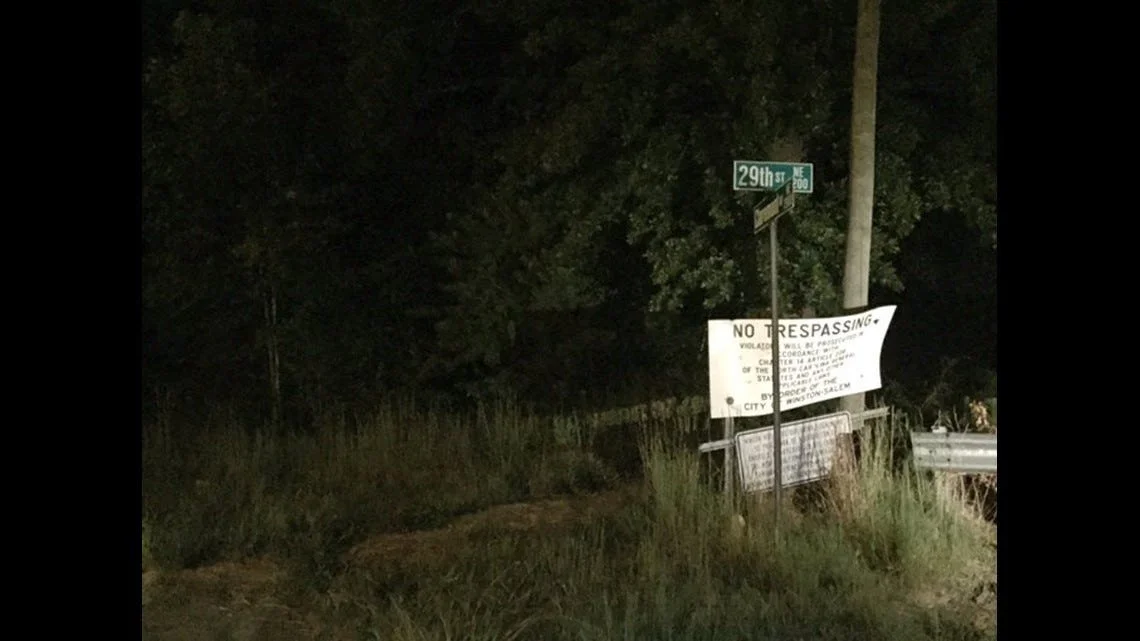
Greenville County, South Carolina, during the time of the 2016 clown sightings.
The Clowns Creep in Carolina
Around 8:30 PM, on August 21, 2016, a nine year-old boy in Greenville County, South Carolina was walking along a man-made trail that cut through the woods near his home. As he walked down the trail he suddenly came upon… clowns. They were whispering to each other and making strange noises. Terrified, he ran back home and told his mother. She didn’t believe him, of course, so he led her to the spot where he had seen the clowns - and she saw them. They flashed green laser lights at her then ran away into the dark woods. Meanwhile, back at their house, the woman’s older son heard noises outside their front door, sounds like chains being dragged, then someone banging on their door.
When the woman got home she called the police, who dutifully took down their descriptions. The deputy assigned to the case decided to ask around to see if anyone else in the Fleetwood Manor Apartments saw anything strange that night. One woman said that, come to think of it, she had seen a clown outside around 2:30 AM on the morning of August 21. The police report says that he was “a large-figured clown with a blinking nose, standing under a post light near the garbage dumpster area,” who “waved at her, and she waved back.” Some local children told the police that clowns would sometimes come out of the woods and offer them money to entice them to go with them. All the kids knew the clowns lived in a house on the edge of the pond at the end of that trail that cut through the woods. Deputies searched the house repeatedly but found nothing. They never found any evidence of any clowns.
Maybe that would have been the end of it. Then three days later the property manager for Fleetwood Manor Apartments posted copies of a letter on all the doors. It warned them to be careful, watch out for your children, call the police if you see anything suspicious. A few days later there were two new sightings in two other apartment complexes not far from Fleetwood Manor; a 12 year old girl told police she saw a man taking pictures of children, with another man wearing a black jacket and a clown mask; another child saw a man in a clown costume and their parents called 911. The following night, another sighting, this time at Shemwood Apartments; this time the children chased two clowns, who broke through a wooden fence and jumped in a waiting car, where another clown drove off in a black Honda. The next evening a girl walking home from school saw a clown lurking in the woods by a local school; at the same time someone at the Park Haywood apartments saw a clown in the complex’s laundromat; he was a middle aged man with his face painted white, a red line around his mouth, a white swimmer’s cap on his head with red hair poking out the sides, smelling of house paint, just standing and staring. T
here was never any surveillance footage, no physical traces left behind. One woman tried to take a picture, but it was too dark to make out. The police investigation continued, and community leaders held a press conference to plead for caution and safety. The sightings continued through September, and then in early October, sightings were reported in Canada, then United Kingdom, then Australia, New Zealand, Singapore, Latin America. By mid-October there were numerous sightings in almost every US state, most of Canada, and 18 other countries. But there was still no evidence. It seemed to be building to a climax at Halloween, October 25, when the clowns would all emerge from their shadowy places at the same time to do something terrible. But almost nothing happened. There was no clown invasion. This wave of clown sightings, the latest since they started around 1981, was over.
Continued in Part 2.